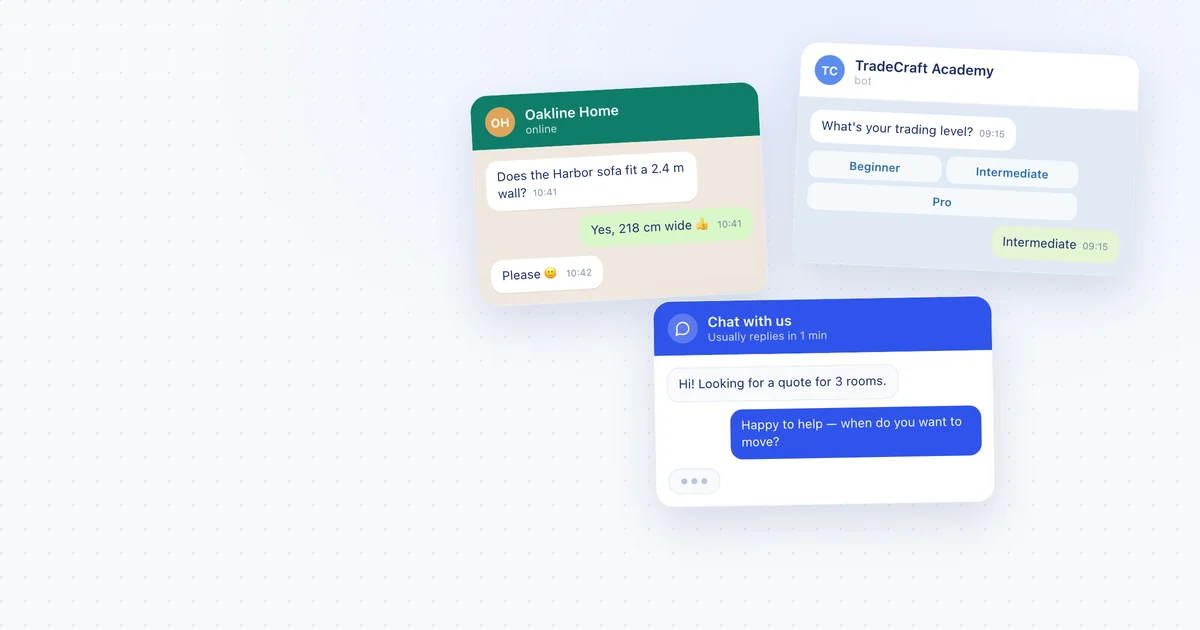
If you've shopped for anything called an "AI sales agent" in the last year, you've probably noticed the term is doing a lot of heavy lifting. It gets slapped on decision-tree chatbots from 2019, on enterprise AI SDR platforms that cost more than a junior hire, and on a growing category of tools that actually reason about a conversation and take action inside your systems. Those are three very different products. For a small team trying to stop losing leads at midnight, the difference between them decides whether you get value or a fancier autoresponder.
This article is a plain-language map of that landscape. We'll cover what actually changed when large language models moved from "chat toy" to "sales operator," how an inbound AI agent qualifies a lead and fills your CRM without a human, why the enterprise AI SDR pitch doesn't fit a five-person company, and what a realistic 2026 setup looks like when nobody on your team writes code.
Flow chatbots vs LLM agents: the real dividing line
The old chatbot is a flowchart. Someone sat down and mapped every branch: "If the user says X, reply Y; if they click button 2, show menu 3." It works beautifully for the three questions you predicted and falls apart the moment a real person types "hey do you guys do the thing my friend told me about, the payment plan one?" There's no node for that, so the bot loops, apologizes, or dumps them to a human who isn't online.
An LLM agent doesn't run on a script. You give it a goal — "qualify this lead and book a demo" — plus context about your product, and it figures out the path itself. It reads intent instead of matching keywords. It handles the messy, off-script, misspelled reality of how people actually message businesses. And critically, it can do things between messages: look something up, update a record, tag a deal, hand off to a person when it hits its limit.
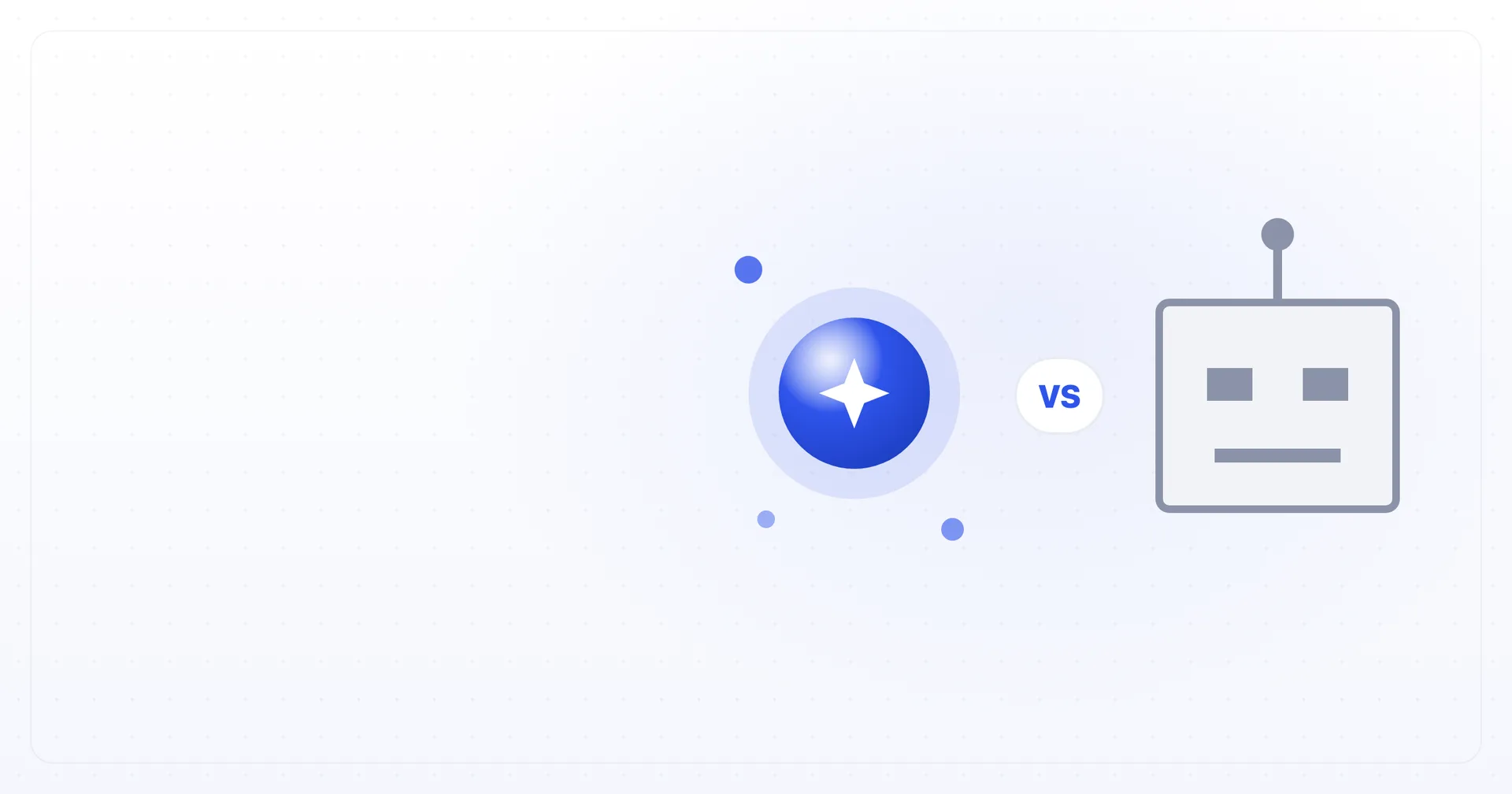
Here's the distinction that matters for buyers:
| Dimension | Flow chatbot | AI sales agent (LLM) |
|---|---|---|
| Logic | Predefined decision tree | Goal-driven reasoning |
| Off-script questions | Breaks or deflects | Answers in context |
| Setup | Map every branch by hand | Describe the goal + knowledge |
| CRM actions | Rarely, needs integrations | Qualifies, tags, updates records |
| Tone | Robotic, canned | Natural, adapts to the person |
| Maintenance | Re-edit flows constantly | Edit the prompt / knowledge base |
The practical takeaway: a chatbot deflects work, an agent absorbs it. That's why the label "AI sales agent" only earns its name when the tool acts on goals and touches your CRM, not when it swaps a keyword-matcher for a slightly chattier one.
How an inbound AI agent qualifies a lead
Let's make this concrete with the most common small-business scenario: someone clicks your ad, lands in WhatsApp or Telegram, and sends a message. What should happen in the next 90 seconds decides whether that lead becomes revenue or a cold "actual?" thread that dies by Thursday.
A capable inbound agent runs roughly this loop:
- Replies instantly, in your voice. No "an agent will be with you shortly." It answers the actual question the person asked, using your product knowledge.
- Qualifies through natural conversation. Instead of firing a rigid form, it works in the questions that matter — budget, use case, timeline, region — as part of talking. People answer questions they don't notice being asked.
- Pulls facts from a knowledge base. Pricing tiers, policies, "do you ship to my country," the discount that only applies on annual plans — a good agent grounds its answers in your documents (a RAG knowledge base) instead of improvising, which is what keeps it from confidently making things up.
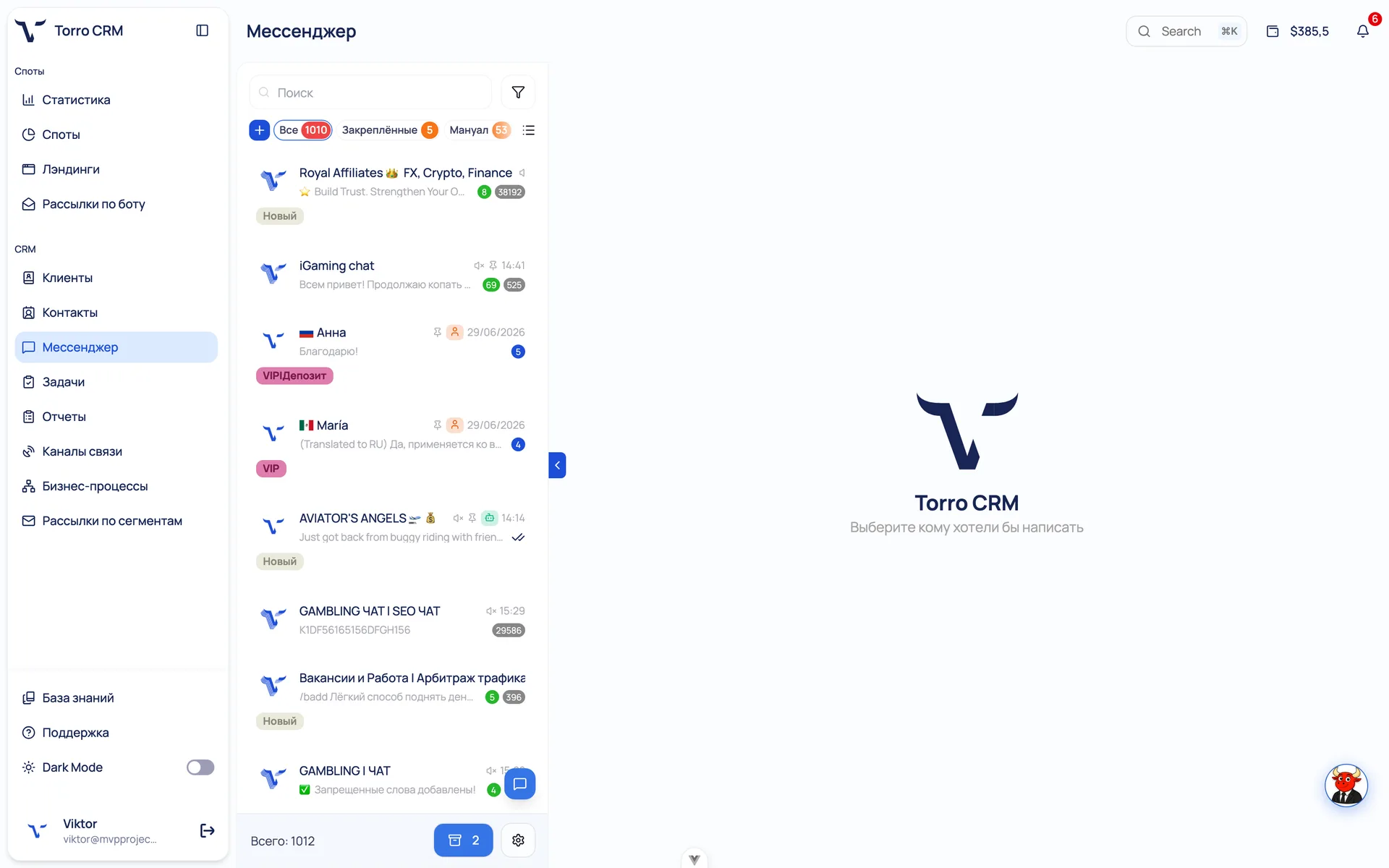
- Fills the CRM as it goes. Name, contact, qualification answers, the goal it's working toward — written into a deal card automatically, so nothing lives only in the chat log.
- Moves the deal and hands off cleanly. It advances the card through your kanban stages and, when it hits the edge of what it should do alone — a pricing exception, a hot buyer ready to sign — it pings a human with full context already captured.
The reason this matters so much on messengers specifically is response speed. Lead-response research has been consistent for over a decade: the odds of qualifying a lead drop sharply after the first five minutes, and businesses that respond first win a disproportionate share of deals. Messaging apps stack a second advantage on top — message open rates routinely sit above 90%, versus roughly a fifth of marketing emails. An agent that answers in seconds, every hour of every day, is simply playing a different game than a team that gets to inbound "when someone's free."
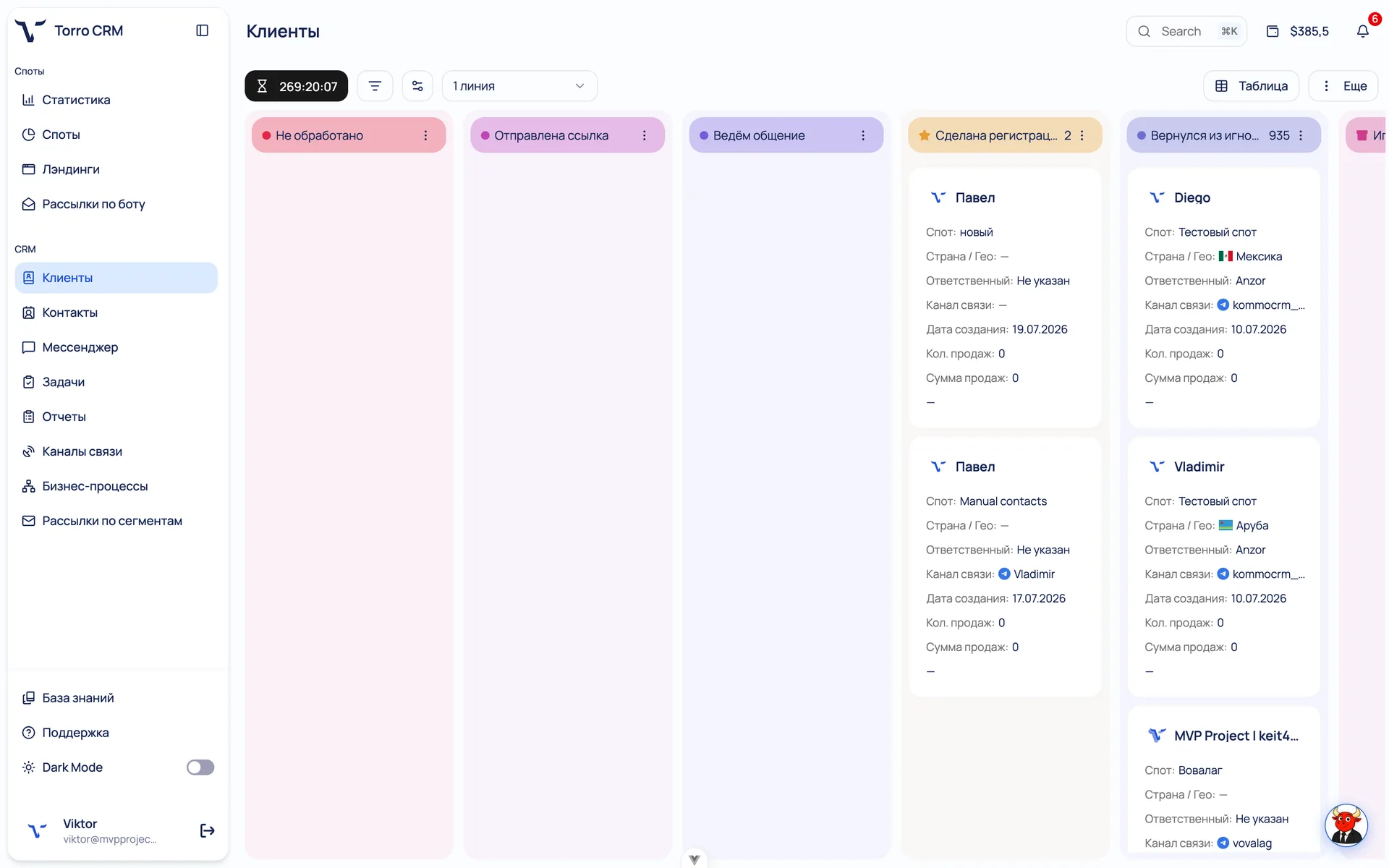
A chatbot answers questions. A sales agent moves a deal forward — it qualifies, records what it learned, and updates your pipeline while you sleep.
Why the enterprise "AI SDR" pitch doesn't fit small teams
Search "AI sales agent" and you'll drown in enterprise AI SDR platforms. They're impressive and they're built for a different buyer. Typically they assume an outbound motion: scrape prospect lists, enrich them, run multi-channel cold sequences across email and LinkedIn, and plug into a Salesforce-grade stack that a RevOps person configures over several weeks. Pricing often starts in the four-figures-per-month range and climbs with seats and volume.
If you run a small team, most of that is either irrelevant or a liability:
- Your problem is usually inbound, not outbound. You already have leads coming from ads and social — they're just falling through the cracks because nobody answers fast enough. You don't need a cold-email cannon; you need someone home when the door rings.
- You don't have a RevOps team. A tool that needs weeks of configuration and a dedicated admin isn't an asset, it's a project you'll abandon.
- Your channel is a messenger, not an inbox. Your customers are on WhatsApp and Telegram, and a lot of enterprise tooling treats those as an afterthought behind email.
- The price math doesn't work. Paying enterprise SDR rates only pencils out at enterprise deal sizes and lead volumes.
The honest framing is that "AI sales agent" splits into two products wearing one name. One is an outbound prospecting machine for sales orgs with a pipeline to feed. The other is an inbound responder that catches and qualifies the demand you're already paying to generate. Small teams almost always need the second one first — and buying the first by mistake is how a $2,000/month tool ends up unused by month two.
What a realistic SMB setup looks like in 2026
Here's the shift that makes agents viable for teams without engineers: setup moved from "build a flow" to "describe a goal." You're no longer diagramming conversation trees. You're writing, in plain language, what the agent should achieve and giving it the material to do it.
A no-code inbound setup in 2026 looks like this:
- Connect the channel. Link your Telegram, and your WhatsApp — either through the official Cloud API or, if you don't have a WhatsApp Business account, through a linked personal device. The point is you meet customers where they already are.
- Give the agent a goal. "Qualify inbound leads, answer product questions, book a demo, and flag hot buyers to me." That's the brief, not a flowchart.
- Feed it a knowledge base. Drop in your pricing, FAQ, and policy docs. The agent retrieves from these to answer accurately instead of guessing.
- Point it at your CRM. Define what a qualified lead looks like and which pipeline stages exist. The agent fills the card and moves the deal.
- Set the guardrails. Decide when it hands off to a human and what it must never promise. Then let it run.
Torro AI is built squarely for this pattern: an inbound messenger agent for small teams that answers in Telegram and WhatsApp, qualifies leads through conversation, fills the CRM card, and moves deals across a kanban pipeline — set up in about five minutes without touching code. Under the hood it leans on the same building blocks we described: goal-driven behavior, a RAG knowledge base so answers stay grounded, and clean handoff to a person when a deal is ready to close. It also folds in the unglamorous-but-essential extras — voice replies, transcription of incoming audio, and analytics that trace a lead from the ad click all the way to payment.
The reason "5 minutes, no code" is more than a marketing line is that it's what the LLM shift actually enables. When the agent reasons from a goal and a knowledge base, there's no branch tree to build. The work that used to take a consultant a week — mapping flows, wiring integrations — collapses into describing your business and connecting a channel.
How to choose without getting burned
If you're evaluating tools this year, a few questions cut through the marketing fast:
- Does it act, or just chat? Ask specifically: does it write to my CRM, tag deals, and move pipeline stages? If the answer is "it can, with a Zapier integration you set up," it's a chatbot with homework.
- Inbound or outbound by design? Be clear about which problem you have. Buying an outbound prospecting suite to solve slow inbound response is a common and expensive miss.
- Is the knowledge grounded? Ask how it avoids making things up. "It uses a knowledge base / RAG" is a good answer; "it's just really smart" is not.
- How long to first value? If onboarding needs a technical admin and multiple weeks, factor in the real chance it never gets finished.
- Does it live where your customers do? For most SMBs that means real, first-class WhatsApp and Telegram support — not email with messaging bolted on.
Run a free lead through it yourself before you commit. Type like a confused customer, misspell things, ask something off-script, then check whether a clean deal card showed up in the CRM afterward. That single test separates a genuine agent from a repainted chatbot better than any feature list.
The bottom line
The move from flow chatbots to LLM agents isn't a version bump — it's a change in what the software can be responsible for. A chatbot answers the questions you anticipated. An agent takes a goal, works a real conversation, records what it learned, and pushes the deal forward inside your CRM. For a small team, that's the difference between a tool that deflects work and one that does it.
You don't need an enterprise AI SDR platform, a RevOps hire, or a month of configuration to get there. What you need in 2026 is an inbound agent that answers instantly on the messengers your customers already use, qualifies leads without a form, keeps your pipeline current on its own, and hands you the hot ones ready to close. Get that one job right and the "AI sales agent" label finally means what it should — a teammate that shows up every time the door rings.