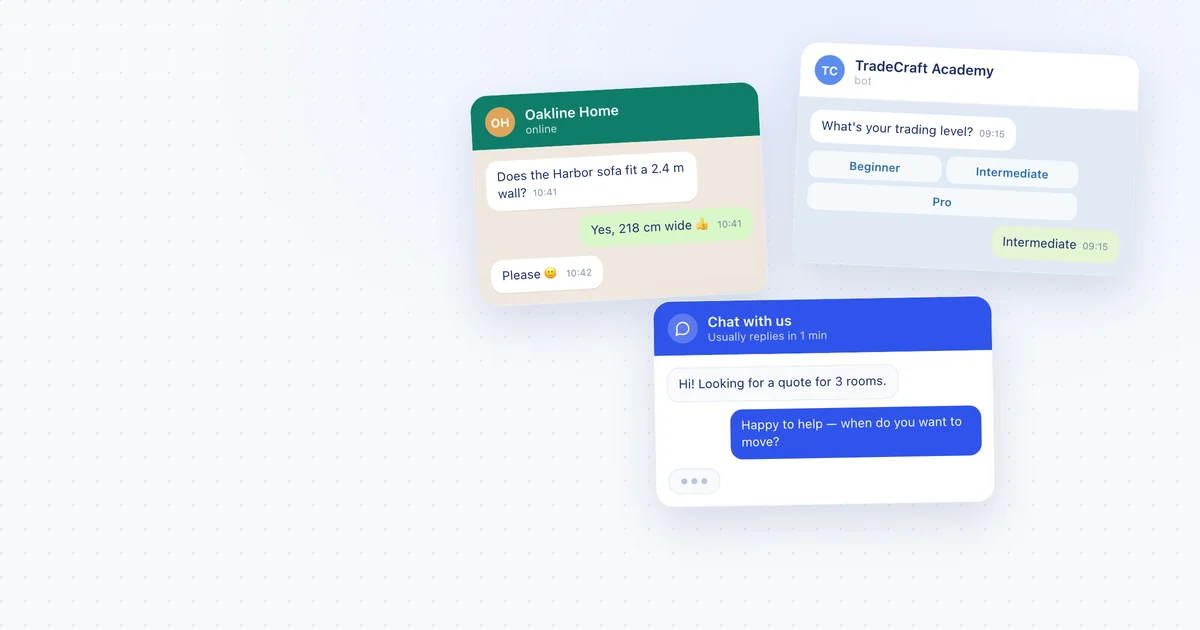
Add up how many working hours your reps burn on the first three messages of every conversation. "Hi there," "Yes, still available," "What can I help you with?" That's not selling — it's manual triage to get a person to the point where talking to them is actually worthwhile. And you're paying for it at full salesperson rates, while that person spends the time acting as a glorified auto-reply.
That exact zone — from first touch to qualified lead — is what an AI sales agent takes off your team's plate today. Not a chatbot with a tree of buttons, but a language model that carries a real conversation toward a specific goal. Let's break down what this tool actually is, how it works under the hood, how it differs from the chatbots you're used to, and where the line still sits between what you can hand to a machine and what still needs a human.
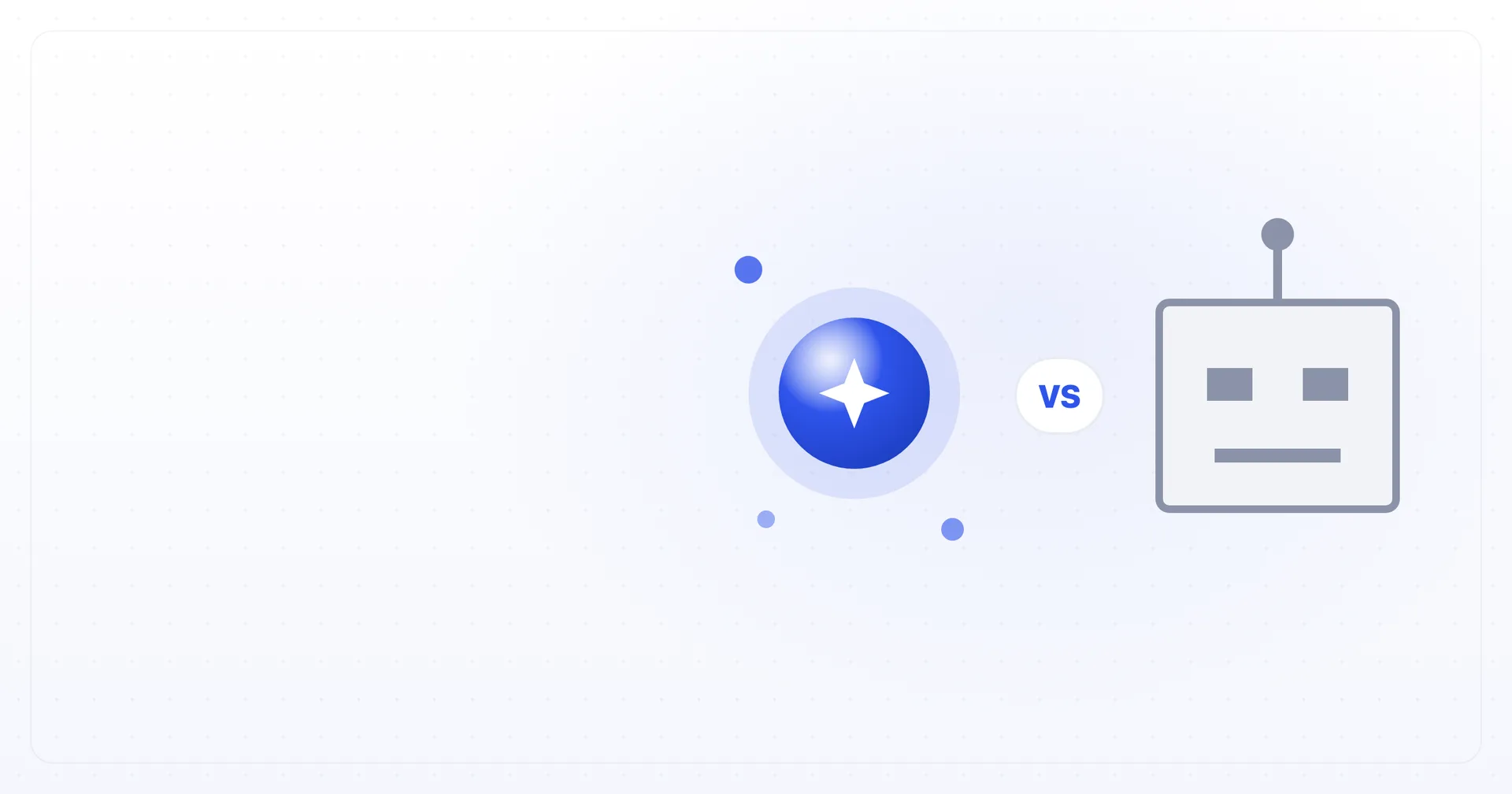
Chatbot vs. AI agent: the difference is architecture, not "intelligence"
From the customer's side, a bot and an agent look identical — just a chat window in a messaging app. Under the hood, though, they're completely different machines.
A scripted chatbot is a flowchart. A developer pre-writes every branch: "if the customer clicks button A, show message B." As long as the user stays on the rails, everything works. But the moment someone types "do you offer installment plans?" while the bot is waiting for a menu selection, the conversation breaks. The bot doesn't understand the question — it only understands pre-defined answer options.
An LLM-powered agent works the opposite way. There's no rigid decision tree. There's a goal ("qualify the lead and book a demo"), context (who the customer is, what they've already asked, what's in stock), and the ability to understand free-form text. From there, the agent decides on its own what to say at each moment to move closer to the goal. The customer can jump between topics, ask questions in any order, type with typos and abbreviations — the agent keeps track of the thread regardless.
| Factor | Scripted chatbot | Goal-driven AI agent |
|---|---|---|
| Logic | "If-then" tree, buttons | Free-form dialogue toward a goal |
| Reaction to an unexpected question | Doesn't understand, hits a dead end | Answers contextually and steers back to the goal |
| Setup | Manually map out every branch | Describe the goal and provide a knowledge base |
| What happens with a new customer question | Requires manually adding a new branch | Answers immediately if the info is in the knowledge base |
| How it feels to the customer | "I'm talking to a machine" | Close to chatting with a real person |
The core distinction: a bot executes a script, while an agent pursues an outcome. If a script doesn't cover a situation, the bot stalls. An agent improvises within the rules it's been given.
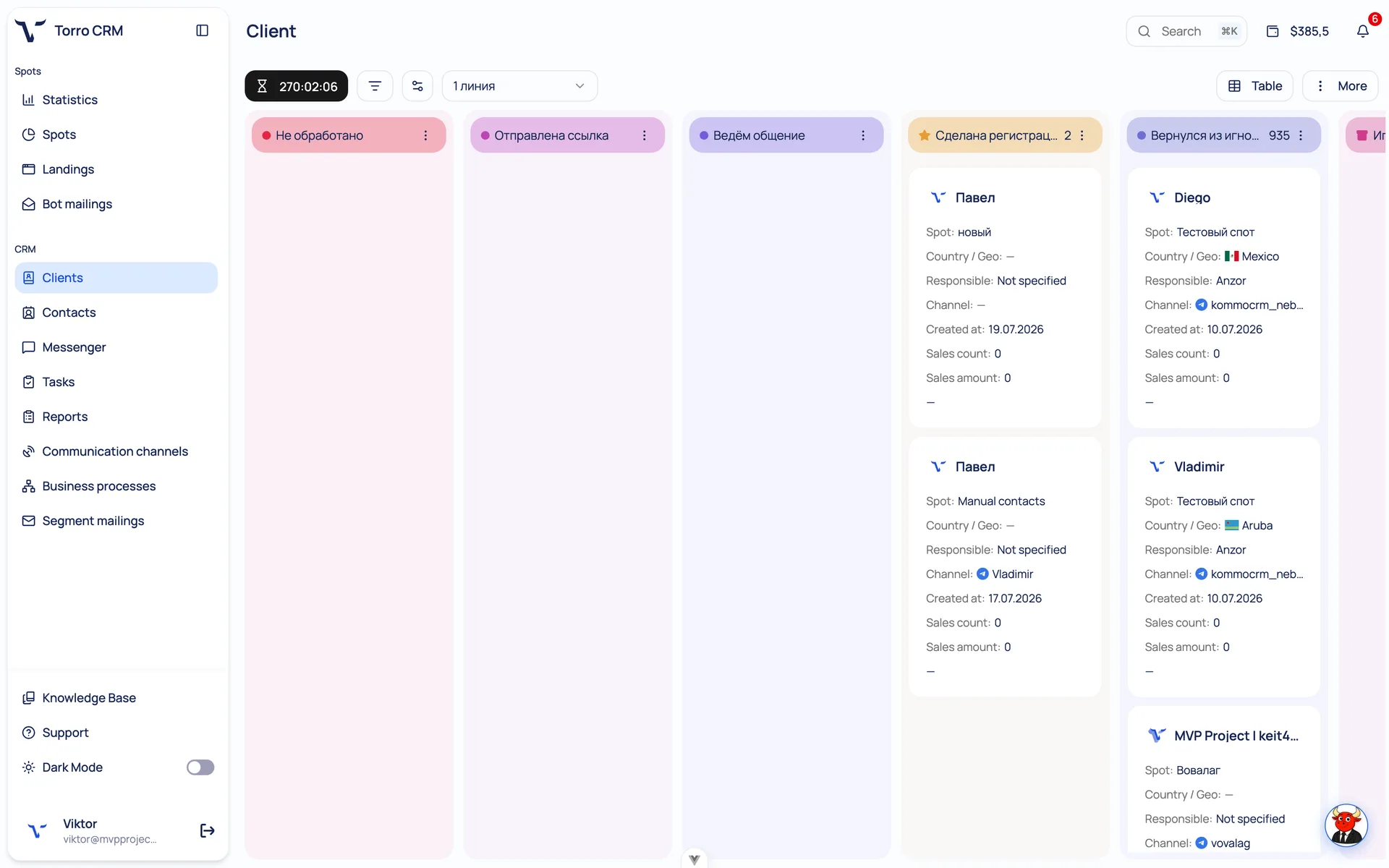
How an AI agent steers a conversation toward its goal
"Pursues an outcome" sounds abstract, so let's look at the actual mechanics. A well-built agent's conversation rests on a few pillars.
Goal
This is the reason the conversation is happening in the first place. The goal might be booking a consultation, collecting data for a quote, confirming an order, or driving toward payment. The agent keeps it in focus throughout: it answers the customer's questions but steadily steers the conversation back on track instead of drifting into endless small talk.
Knowledge base
For the agent to talk about your product accurately instead of making things up, it needs a source of truth. The technology behind this is called RAG — retrieval-augmented generation: before responding, the system pulls the relevant pieces from your materials (pricing, shipping terms, FAQs, policies) and grounds its answer strictly in that content. Upload your documents, and the agent speaks in your company's facts instead of generic internet answers.
Background tasks
Alongside the main conversation, the agent does background work: it picks up on the customer mentioning a city, a budget, or a preferred time, and quietly logs it. The customer never feels like they're filling out a form — they're just chatting, and the right fields populate themselves. In Torro AI, this runs on a mechanism called side-tasks: the agent carries a natural conversation while simultaneously extracting structured data for your CRM.
Handling any format
Customers on messaging apps don't only type text. A modern agent understands voice messages (transcribing them), can reply with voice of its own, and reads photos and files. For the customer, this removes the biggest barrier — no need to adapt to the bot, they can just communicate the way they normally would.
The difference between a bot and an agent is the same as the difference between an answering machine and an intern. The answering machine plays a recording. The intern listens to what's said and acts on it within the scope of their instructions.
Lead qualification and automatic CRM fill-in
This is where the agent delivers the most tangible savings. Qualification is filtering: figuring out who you're talking to, whether they're ready to buy, whether they fit your target audience. Normally a rep handles this by asking the same questions to dozens of people a day.
An agent does it inside the conversation, naturally. Here's a typical sequence:
- First touch. A lead comes in from an ad. The agent greets them and gets straight to the point — skipping "still interested?" in favor of a clarifying question about what they actually need.
- Gathering criteria. As the conversation unfolds, it establishes the essentials: what they need, how much, by when, and what budget they're working with — through contextual questions, not a form.
- Handling objections. The customer asks about price, guarantees, timelines — the agent answers from the knowledge base instead of "let me pass your question to a rep."
- Logging in the CRM. Everything learned goes straight into the deal record: name, contact info, need, budget, tags. Automatically, with no manual entry.
- Moving through the pipeline. A qualified lead moves into the right kanban column. The rep sees an already-warmed customer with a filled-out record, not an empty contact card.
The savings here are twofold. First, it removes the grunt work of first contact. Second — and this matters more — it closes the biggest hole in any sales team: unfilled records. Reps are perpetually too busy to log data, and within a month the CRM turns into a pile of contacts with no history. When the agent fills the record as the conversation happens, the data stays current and complete.
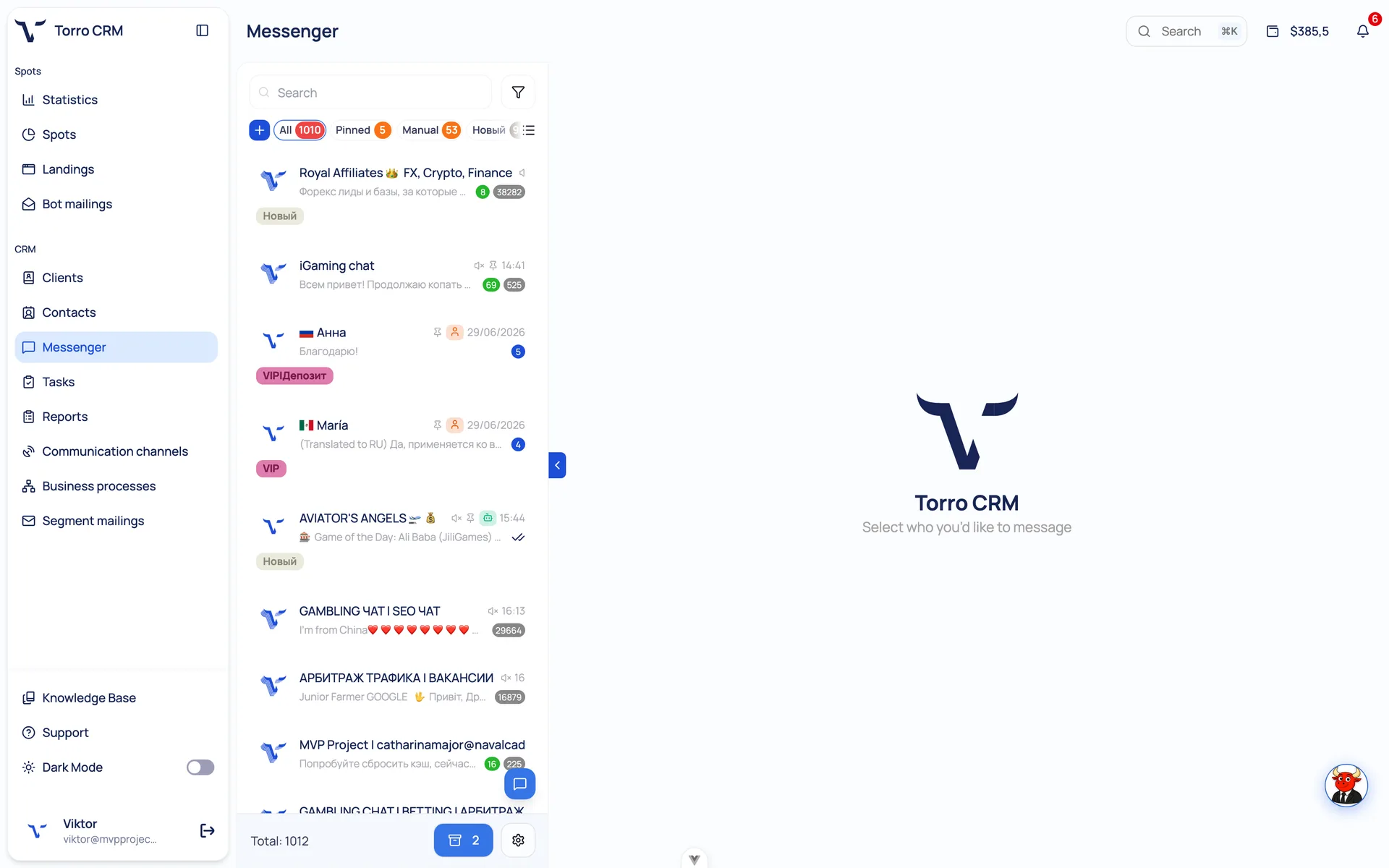
Response speed — an underrated conversion lever
There's a metric almost everyone ignores, and it hits revenue directly: time to first response. Classic lead-generation research shows the odds of meaningfully connecting with a lead drop sharply if you respond an hour later instead of within the first few minutes. A customer messaging you expects a reaction right now — if they don't get one, they move on to the next seller in their search results.
A human rep physically can't respond instantly around the clock. Overnight, on weekends, during the lunch rush, inquiries pile up. An agent responds in seconds, any time of day — and messaging channels give it a massive reach advantage on top of that: open rates on Telegram and WhatsApp run several times higher than email campaigns, where fewer than a quarter of messages typically even get opened.
Put the two together: an instant reply, in a channel the customer actually reads. This isn't about "replacing people with robots" — it's about making sure no lead goes cold in a queue while a rep is busy or asleep.
Where the agent excels, and where you still need a human
Let's be honest: an AI agent isn't a silver bullet. There are areas where it objectively beats a human, and areas where you shouldn't let it near the conversation. Understanding that line is what separates a rollout that works from one that disappoints.
The agent excels where:
- There's a high volume of similar first-touch inquiries — qualification, FAQ answers.
- Speed and 24/7 coverage matter.
- You need structured data captured without losing any of it.
- The conversation follows a clear, repeatable sales pattern.
- Lead volume has outgrown what your human team can keep up with.
A human is still needed where:
- The deal is complex, with non-standard terms and negotiation.
- The situation is emotionally charged — a conflict, an upset customer, a sensitive topic.
- The deal size is large enough that the decision hinges on trust in a specific person.
- Expert judgment is required that isn't captured in the knowledge base.
Which is why the right model isn't "agent instead of a sales team" — it's "agent as the first line." It absorbs the volume, filters out poor fits, warms up prospects, and hands off a prepared customer with a complete record to the rep. A good tool gives the agent a mechanism for a smooth handoff: at the right moment, it brings in a human instead of pretending to know everything. In that setup, reps get to do the job they were actually hired for — closing deals, not typing "hi there."
How to launch an agent without writing code
A couple of years ago, setting something like this up meant developers and weeks of integration work. Today, a working setup comes together in minutes, and the path looks roughly the same on any no-code platform:
- Connect a channel. Link Telegram, WhatsApp, or both to a shared inbox.
- Describe the agent. Set its role, tone, and conversation goal — in plain text, no coding required.
- Upload a knowledge base. Pricing, terms, FAQs — so the agent speaks in your company's facts.
- Configure CRM fields. Specify exactly what to capture from the conversation and which pipeline columns to move deals into.
- Test it and turn it on. Run through a few conversations as a customer would, tune the wording, then launch it on real traffic.
For more complex cases, there's still room for no-code automation on top: the agent carries the live conversation while flow logic is assembled from blocks — triggers, conditions, A/B branches, webhook calls to external systems. That combines the flexibility of a language model with the predictability of business logic: the agent improvises in conversation, but critical steps still follow clear rules.
Bottom line
An AI sales agent isn't "a better chatbot" — it's a different class of tool entirely. A bot follows a written script and breaks on the first unexpected question. An agent understands free-form speech, carries a conversation toward a specific goal, qualifies leads, and fills in your CRM on its own — while critical business logic still runs inside clear, defined rules.
The smart strategy isn't to dream of fully replacing your sales team — it's to hand the agent the first line: the grunt work of first contact, qualification, and instant replies on messaging apps. That frees up your reps to stop being expensive answering machines and get back to what actually makes money — closing prepared, warmed-up customers. And "hi, still available?" finally stops being a line item on their paycheck.