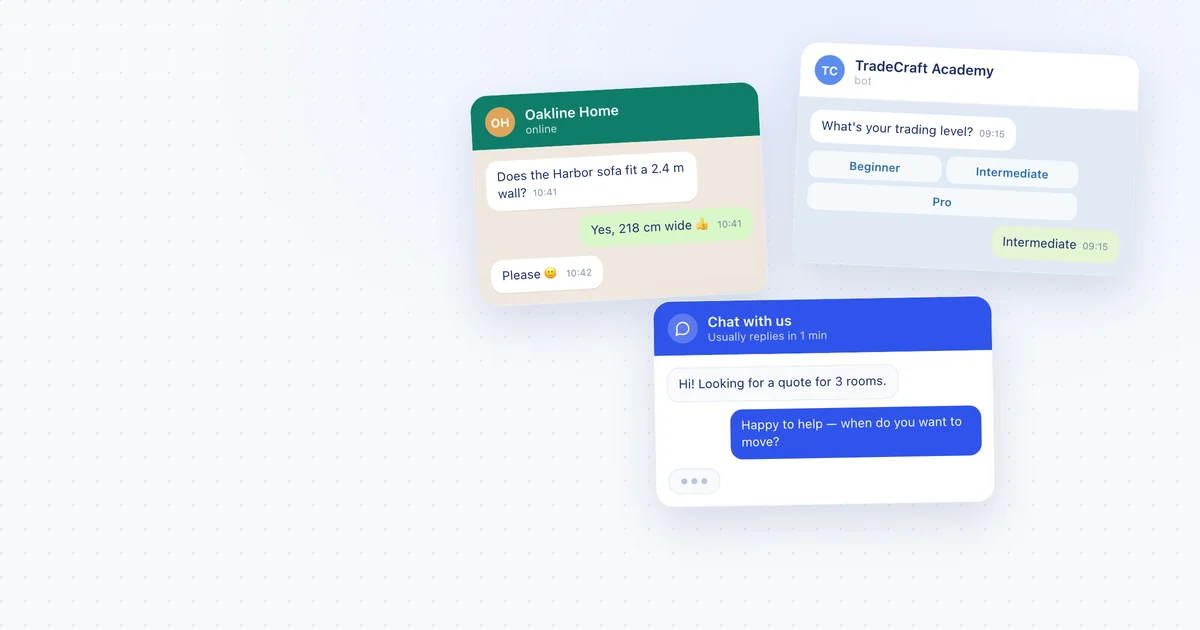
Every business wants a chatbot. Far fewer want to admit that most chatbots quietly annoy customers and get ignored. The difference between a bot that drives revenue and one that gathers dust isn't the AI model behind it — it's the design decisions around timing, tone, and what happens after the first message. Below are 15 chatbot examples for sales that actually move deals forward, organized by channel and use case, plus the patterns worth stealing for your own setup.
What Makes a Sales Chatbot Actually Convert
Before diving into specific chatbot examples for sales, it's worth naming the traits they share. Almost every high-performing sales bot does five things well:
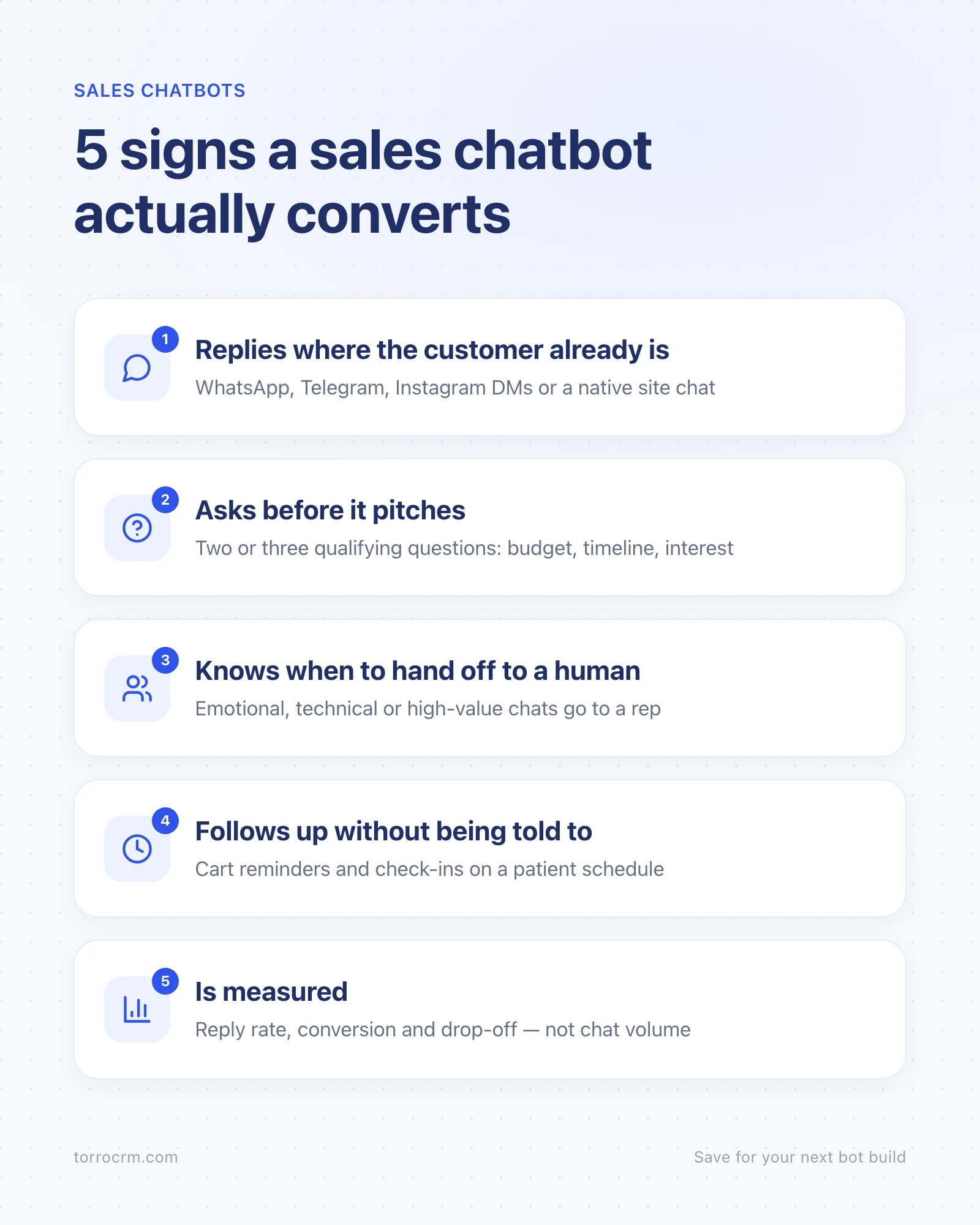
It replies where the customer already is. Forcing someone into a new app or web widget kills momentum. The best sales chatbot examples live inside WhatsApp, Telegram, Instagram DMs, or a website chat that feels native.
It asks before it pitches. Two or three qualifying questions (budget, timeline, product interest) let the bot route the conversation intelligently instead of blasting the same script at everyone.
It knows when to hand off to a human. The moment a conversation gets emotional, technical, or high-value, a good bot flags a human rep instead of stubbornly trying to close the deal itself.
It follows up without being told to. Cart reminders, "still interested?" nudges, and post-purchase check-ins happen automatically, on a schedule that respects the customer's patience.
It's measured. Someone is tracking reply rate, conversion rate, and drop-off points — not just "number of chats handled."
Keep these five in mind as you look through the chatbot use cases for sales below. Almost none of them require exotic technology; most run on a messenger-first CRM with a no-code automation builder and a shared inbox so no lead falls through the cracks.
Ecommerce Chatbot Examples That Recover Abandoned Carts
Cart abandonment is the most obvious place a chatbot pays for itself, because the customer already showed intent — they just need a nudge, a discount, or an answer to one lingering doubt.
The 20-minute nudge. A fashion retailer's bot messages customers 20 minutes after they abandon checkout, showing the exact items left in the cart with a direct payment link. No discount, just a reminder — because most abandonment is distraction, not price resistance.
The objection-buster. A skincare brand's bot follows up with "Still deciding? Ask me anything about ingredients or shipping" instead of a generic reminder, which surfaces real objections (allergies, delivery time) the bot can answer instantly.
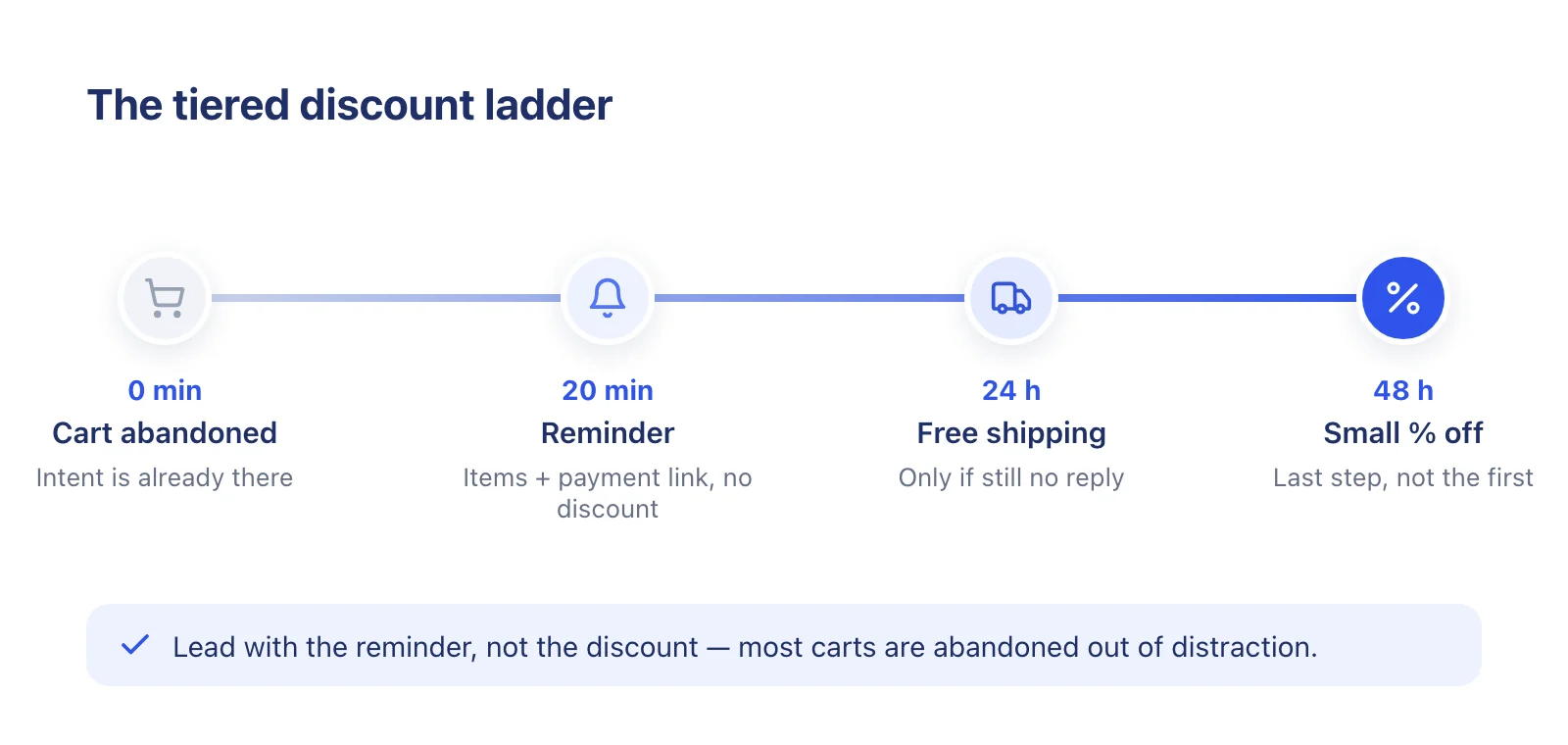
The tiered discount ladder. An electronics store waits 24 hours, then offers free shipping; if there's still no response after 48 hours, it offers a small percentage off — protecting margin by not leading with the discount.
The back-in-stock closer. A sneaker resale bot lets shoppers "raise their hand" for sold-out sizes, then messages the moment stock returns with a 15-minute reservation window, creating urgency without fake countdown timers.
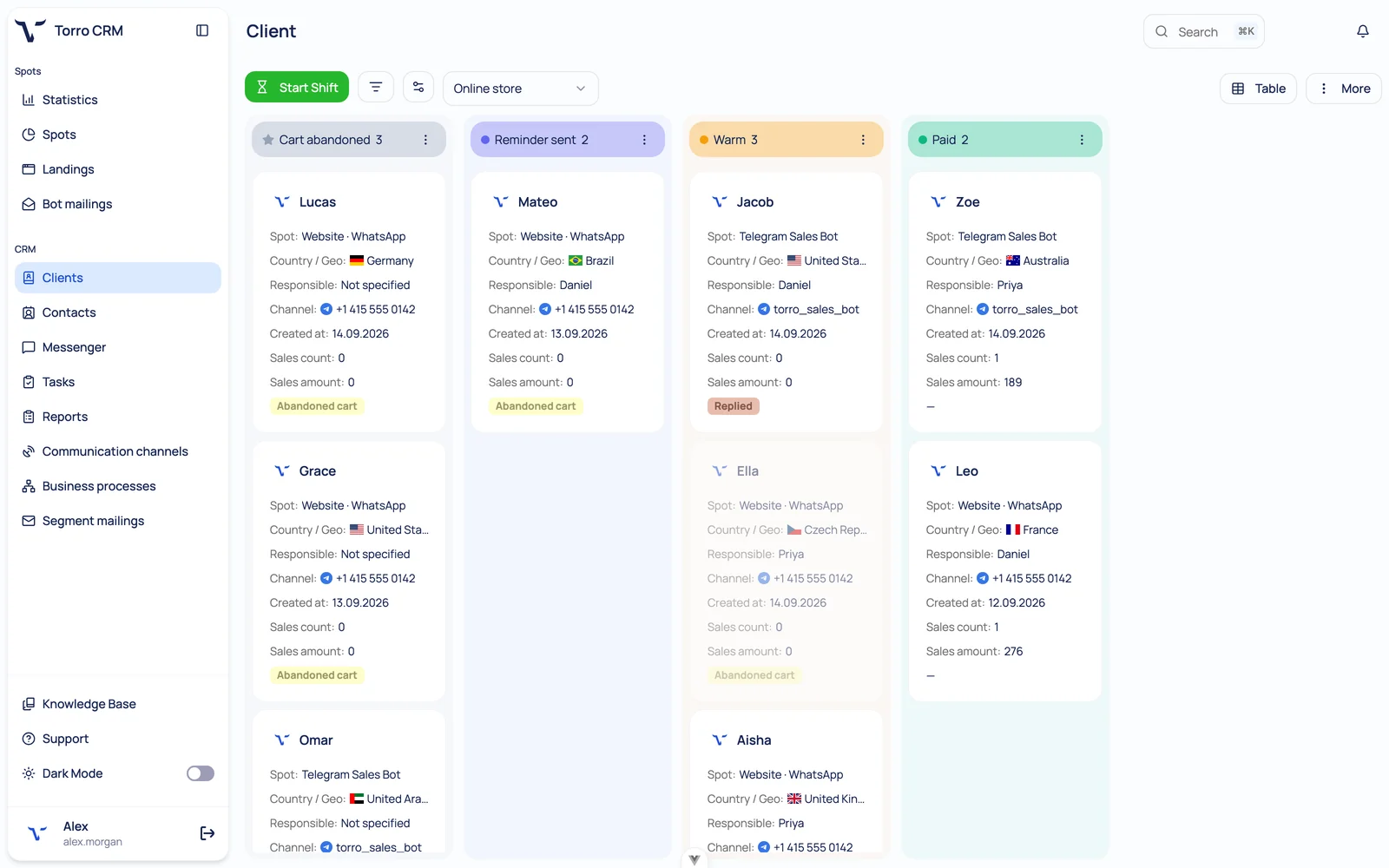
The common thread: these bots don't just remind, they remove friction. A CRM with a visible pipeline helps here too — when an abandoned-cart lead replies, the conversation should automatically move to a "warm" stage so a rep can jump in if the bot can't close it alone.
WhatsApp Chatbot Examples That Turn Chats into Checkouts
WhatsApp's near-universal open rates make it the highest-leverage channel for commerce in most of Latin America, the Middle East, South Asia, and parts of Europe. These whatsapp chatbot examples show why it works so well for closing, not just support.
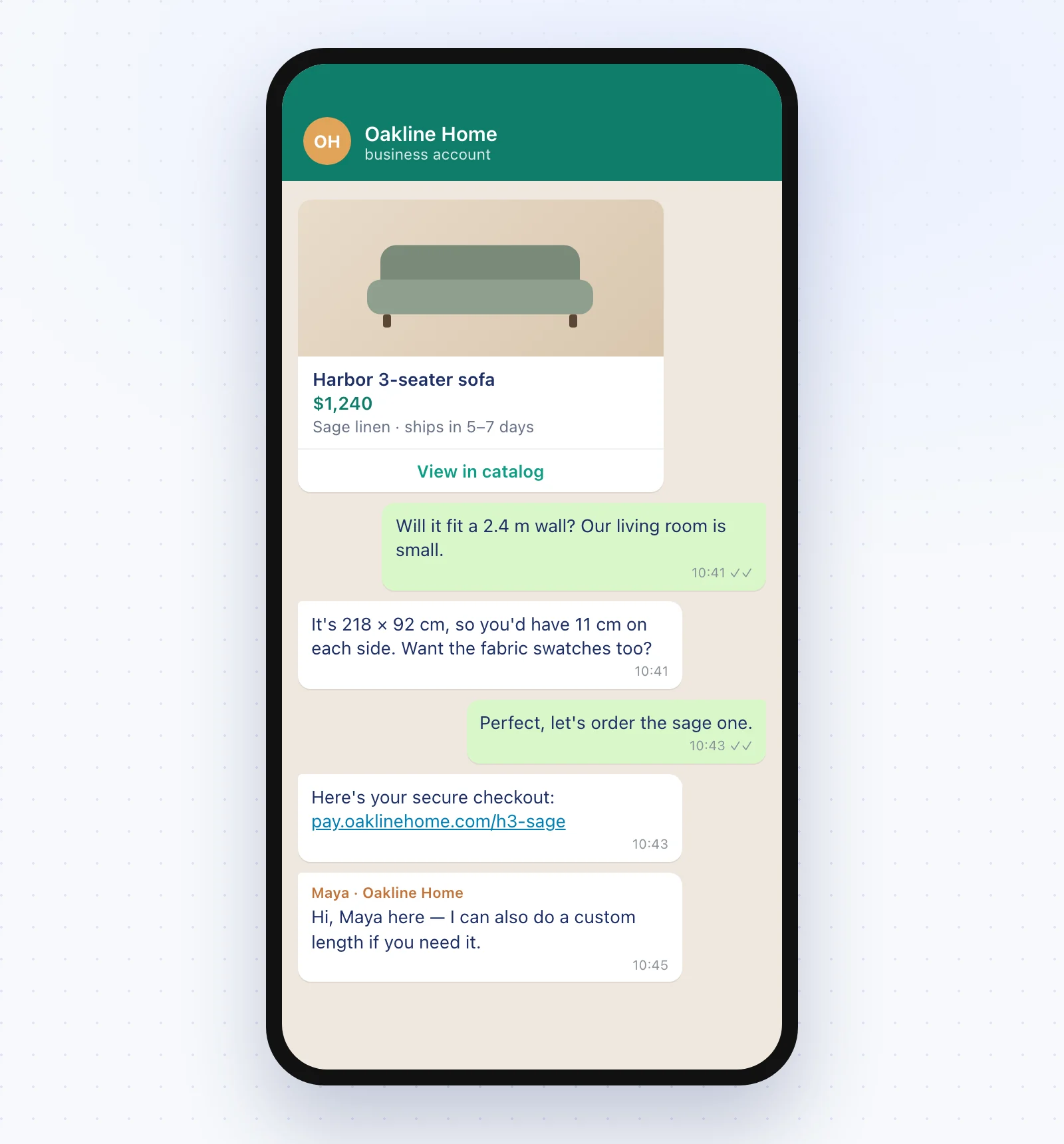
The catalog-in-chat flow. A furniture brand connects its WhatsApp Business catalog so customers browse products, ask about dimensions, and pay — all inside one thread, with the bot answering spec questions and a human closing on custom orders.
The appointment-to-sale bridge. A dental clinic's bot books consultation slots via WhatsApp, sends a reminder 2 hours before, and after the visit asks for a review or referral — turning a service booking into a lightweight sales funnel.
The broadcast-then-converse model. A DTC food brand sends a WhatsApp broadcast about a limited restock; anyone who replies gets pulled into a 1:1 bot conversation that handles sizing, payment links, and delivery estimates.
The human-escalation trigger. A real estate agency's bot qualifies buyers (budget, location, timeline) then hands the thread to the right agent with a full summary already typed out — so the agent's first message references specifics instead of "hi, how can I help?"
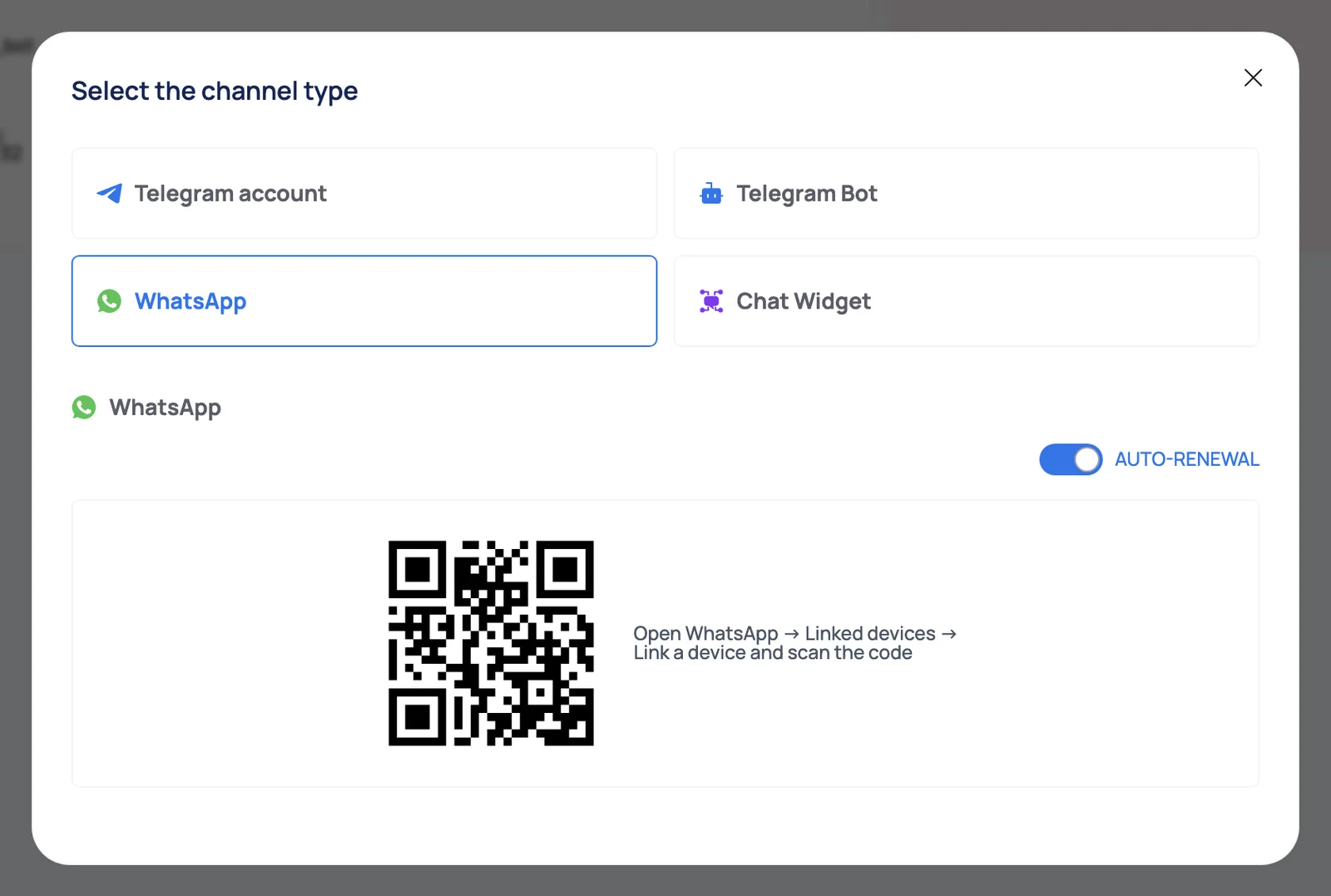
Because WhatsApp can connect either through the official Business API or a linked device, businesses of very different sizes can run these flows. Torro supports both connection types, which matters if you're starting small on a linked device and plan to scale into the API later without rebuilding your automations from scratch.
Telegram Chatbot Examples Built for Fast-Moving Sales Teams
Telegram chatbot examples tend to look different from WhatsApp ones — the platform's bot API is more flexible, and its audience skews toward crypto, gaming, education, and B2B communities that like fast, text-heavy interactions.
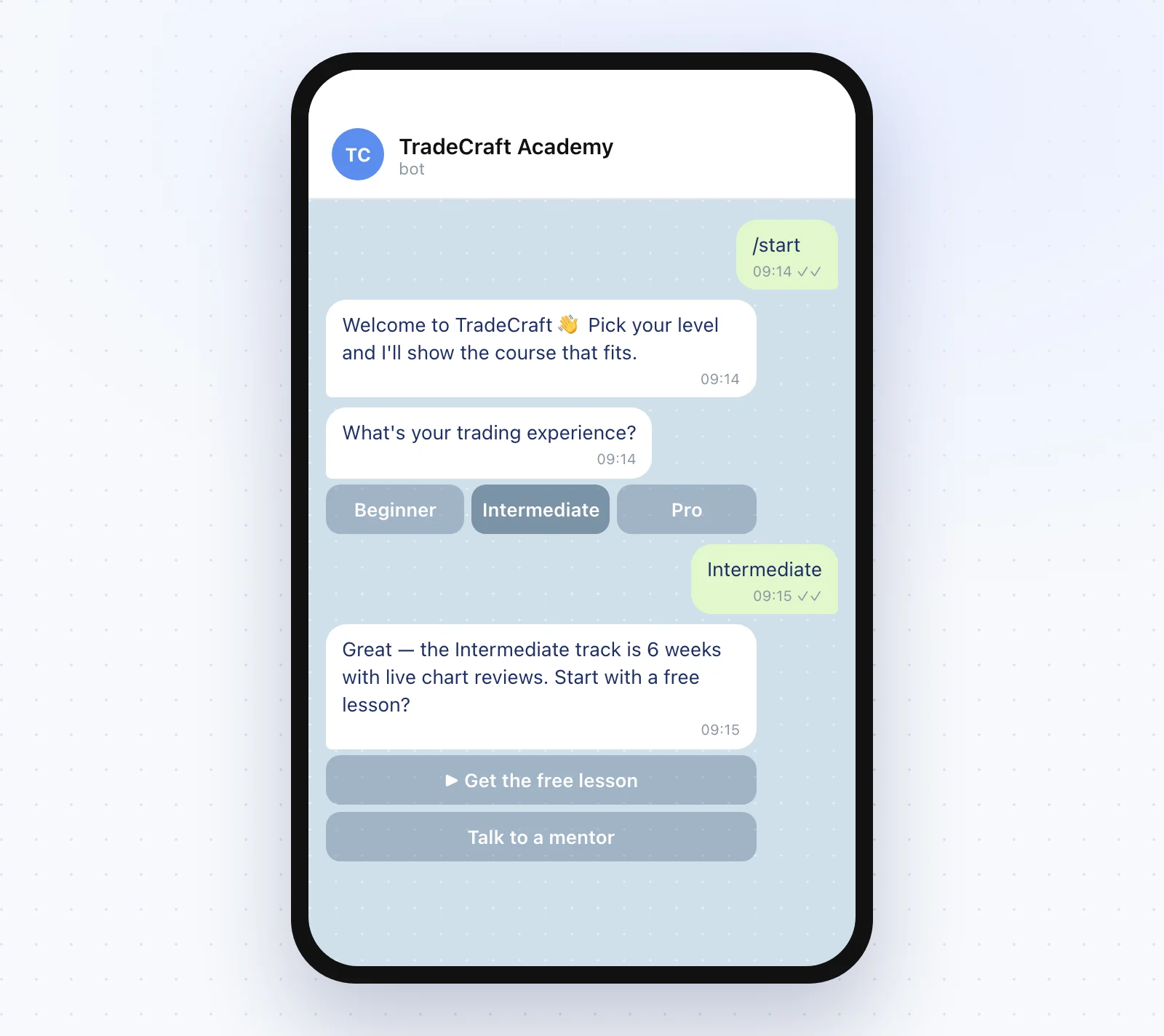
The inline-menu qualifier. A trading course seller uses Telegram's inline buttons so leads tap through "Beginner / Intermediate / Pro" instead of typing, cutting qualification time to under 30 seconds and routing each tier to a different offer.
The community-to-DM funnel. A SaaS tool posts value content in its Telegram group; anyone who reacts with interest gets auto-DM'd by a bot offering a demo slot, turning passive community members into booked calls.
The price-alert closer. A crypto signals service sends automated price alerts, and any reply triggers a bot conversation that upsells the premium tier — using genuine urgency instead of manufactured scarcity.
The onboarding drip. An online school's bot sends a free lesson via Telegram, then over three days drips two more, ending with a time-limited enrollment link — a slow-burn nurture sequence that would feel spammy over email but reads as normal in a messaging app.
Because Telegram sales cycles often move fast and informally, teams need a shared inbox where multiple reps can see the same conversation history — otherwise two people end up pitching the same lead twice, which happens more often than most teams admit.
AI Chatbot Examples for Business That Qualify Leads Automatically
The newest wave of ai chatbot examples for business uses LLMs instead of rigid decision trees, which means the bot can hold a real conversation, understand loose phrasing, and still extract the structured data a sales team needs.
The free-text qualifier. Instead of multiple-choice buttons, a B2B services bot lets leads describe their problem in their own words; the LLM extracts industry, budget range, and urgency, then tags the conversation automatically in the CRM.
The FAQ-then-pitch hybrid. A software company's bot answers pricing and integration questions accurately (pulled from a knowledge base) and only pitches a demo once it senses genuine interest, rather than pushing a call on message one.
The multilingual router. An agency running ads across three countries uses one AI bot that detects language automatically and replies accordingly, so a lead from Brazil and a lead from Germany get equally fluent responses without separate scripts.
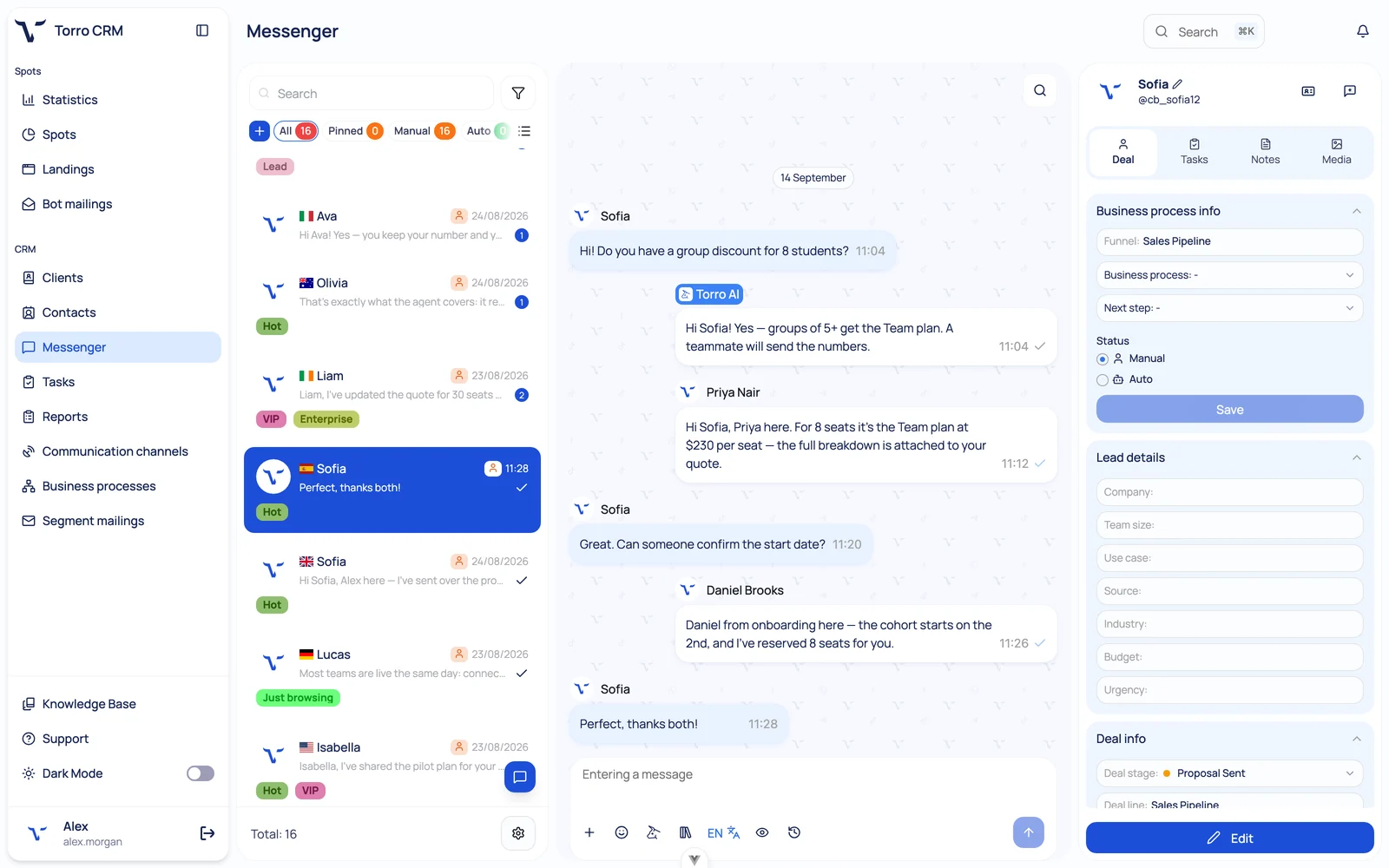
This is exactly the space where a built-in AI sales agent earns its keep: it can run 24/7 across WhatsApp and Telegram, answer in the customer's language, ask qualifying questions in natural conversation, and log everything against a kanban card — so a human only steps in once the lead is genuinely sales-ready. Torro's AI agent works this way by design, sitting inside the same inbox and pipeline your reps already use instead of living in a separate dashboard.
Chatbot Type | Best For | Key Strength | Watch Out For |
|---|---|---|---|
Ecommerce cart-recovery bot | Online retail | Recovers intent that already existed | Overusing discounts erodes margin |
WhatsApp catalog bot | DTC, local services | High open rates, native checkout | Needs API for scale, linked device for testing |
Telegram inline-menu bot | Communities, courses, crypto | Fast qualification via buttons | Less discoverable than WhatsApp for casual buyers |
LLM-based AI agent | B2B, multilingual audiences | Natural conversation, flexible input | Needs good knowledge base to stay accurate |
Rule-based decision-tree bot | Simple, repetitive queries | Predictable, cheap to build | Breaks on unexpected phrasing |
Small Business Chatbot Examples That Punch Above Their Weight
Not every business needs an AI model or a six-figure martech stack. Some of the best sales chatbot examples come from small teams that automated one repetitive task instead of trying to automate everything.
The single-question qualifier. A local moving company's bot asks one question — "How many rooms?" — before quoting a price range, cutting out endless back-and-forth for a service where most quotes follow a predictable pattern.
The booking-slot bot. A one-person tutoring business uses a simple Telegram bot to show open slots and confirm bookings, replacing what used to be dozens of manual back-and-forth messages per week.
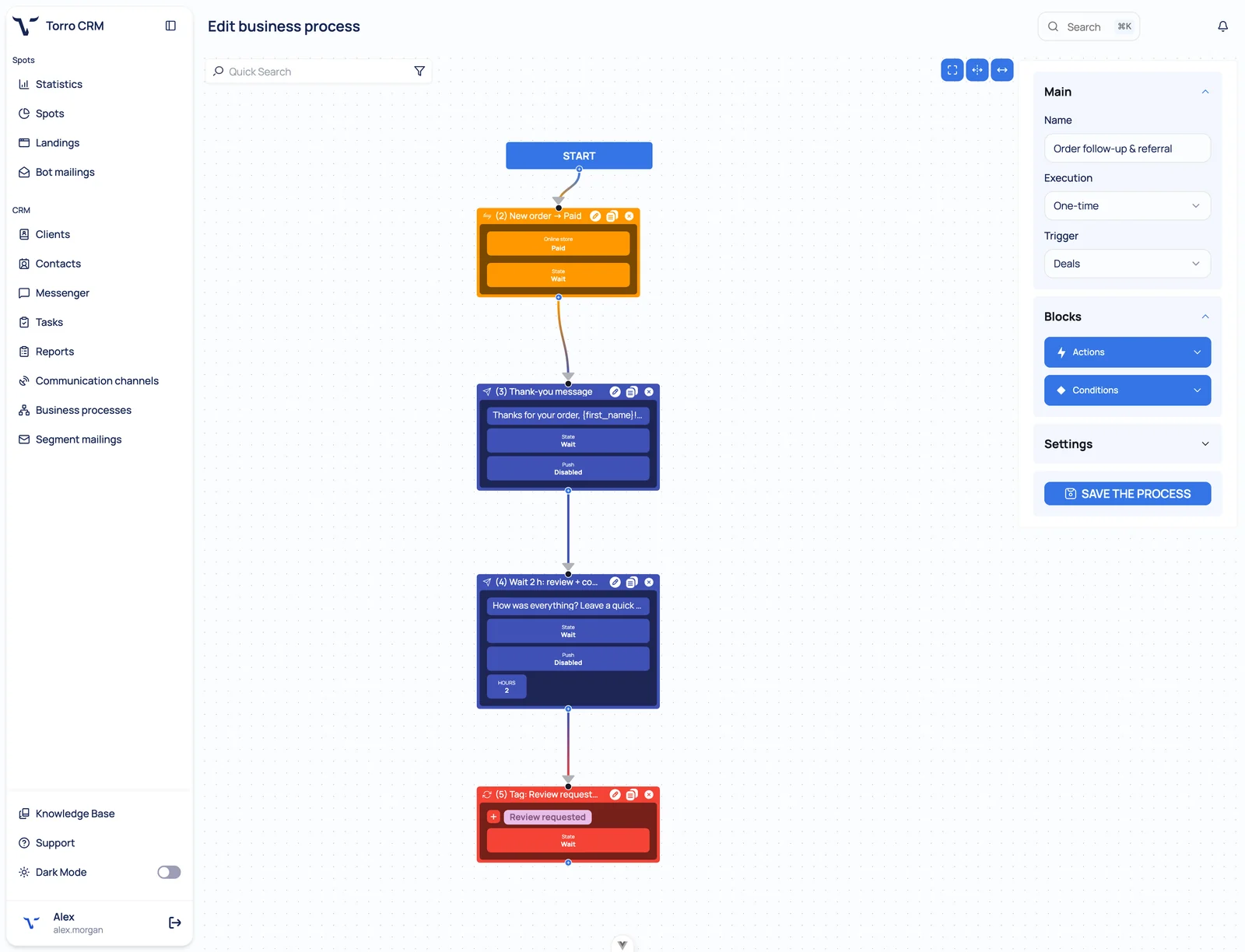
The review-and-referral loop. A neighborhood café's WhatsApp bot sends a thank-you message after each order with a one-tap review link and a referral code, generating a steady trickle of new customers from a two-message automation.
The restock waitlist. A small candle maker with limited batches uses a bot to collect "notify me" requests, then sends one broadcast when a new batch drops — turning scarcity into a built-in sales channel instead of a customer-service headache.
None of these require custom development. A no-code automation builder with pre-set triggers (new message, tag added, time delay) can replicate every one of them in an afternoon, which is usually the actual barrier for small teams — not lack of ideas, but lack of time to wire things together.
Key Takeaways for Building Your Own High-Converting Sales Chatbot
Looking across all 15 chatbot examples for sales above, a few practical lessons repeat themselves regardless of industry or channel:
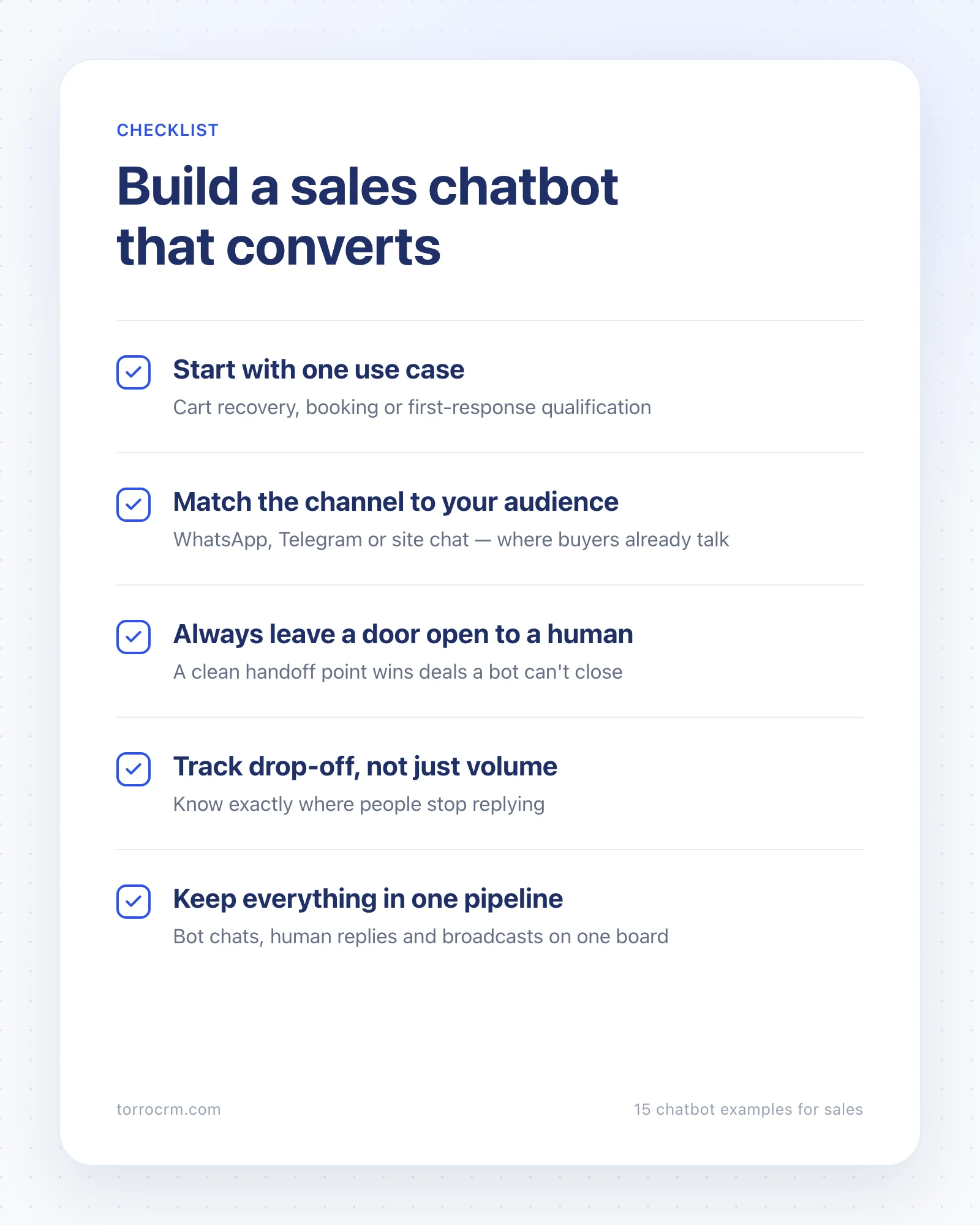
Start with one use case, not a full replacement for your sales team. Cart recovery, booking, or first-response qualification are safer starting points than trying to automate the entire funnel on day one.
Match the channel to your audience, not your preference. WhatsApp wins where it's the default messaging app; Telegram wins with communities and niche audiences; your website chat still matters for cold, anonymous traffic.
Always leave a door open to a human. The chatbot use cases for sales that convert best all include a clean handoff point — a bot that never lets a human take over is a bot that eventually loses winnable deals.
Track drop-off, not just volume. The number of conversations a bot handles means little if you don't know where people stop responding.
Keep everything in one pipeline. When bot conversations, human replies, and broadcasts all live in the same shared inbox and kanban board, nothing gets double-handled and nothing gets forgotten.
The businesses behind these examples didn't succeed because they had access to better AI than everyone else — they succeeded because they were specific about what problem the bot was solving and disciplined about following up on what the bot couldn't close alone. That combination, more than any particular feature, is what turns a chatbot from a novelty into a real sales channel.