If you've spent an afternoon researching how to run WhatsApp for sales, you've probably been funneled toward the same binary: use the free WhatsApp Business App, or graduate to the WhatsApp Business API (usually through a BSP — a Business Solution Provider). That's the story most vendors tell, because those are the two routes they sell. But there's a third path that almost nobody in the BSP ecosystem mentions, for the simple reason that they don't make money on it: the linked-device approach — connecting automation to a real WhatsApp account the same way WhatsApp Web or WhatsApp Desktop does, for a flat cost of roughly $10/month and no Meta verification.
This article compares all three honestly, including the trade-offs the API salespeople gloss over and the risks the linked-device evangelists conveniently skip. By the end you'll know which one actually fits your volume, your budget, and your appetite for platform risk.
The three ways to run WhatsApp, in plain terms
Before the table, it helps to understand what each option really is under the hood, because the marketing names blur together fast.
- WhatsApp Business App — the free consumer-grade app you install on a phone. Designed for a single business with a small team, it has a catalog, quick replies, labels, and away messages. It is manual by design: a human taps out replies.
- WhatsApp Business API (Cloud API) — Meta's official programmatic channel. There's no app to open; you connect software to it. This is what powers big brands' notification blasts and chatbots. It requires a verified Meta Business account, an approved phone number, and pre-approved message templates for anything you send outside a 24-hour customer-initiated window.
- Linked device — instead of an official API, your automation attaches to an existing personal or Business-App account as an additional linked device, exactly like scanning a QR code to open WhatsApp on your laptop. No Meta verification, no template approvals, no per-conversation billing. You automate a normal WhatsApp number.
The honest comparison table
Here's the side-by-side that BSP sales decks tend to leave incomplete. Numbers reflect typical 2026 conditions; Meta's exact API pricing varies by country and message category.
| Factor | Business App | Cloud API (via BSP) | Linked device |
|---|---|---|---|
| Monthly cost | Free | Platform fee + per-conversation charges (often $50–500+) | ~$10 flat |
| Meta verification | None | Required (business docs, phone approval) | None |
| Setup time | Minutes | Days to weeks | Minutes (scan a QR) |
| Automation / AI replies | Very limited | Full, but template-gated outbound | Full, free-form |
| Template approvals | N/A | Required for outbound outside 24h window | Not required |
| Broadcast / bulk | ~256 per list, manual | High volume, metered | Moderate, needs anti-ban pacing |
| Green "verified" badge | No | Possible | No |
| Ban / suspension risk | Low | Very low (official) | Real if abused; manageable with limits |
| Best for | Solo / tiny team | Enterprise, high volume, compliance-heavy | SMB sales teams wanting AI without API tax |
Why speed matters more than the channel you pick
It's easy to get lost in the app-vs-API debate and forget what actually moves revenue: response time. The data on this is brutal and consistent. A lead contacted within the first five minutes is worlds more likely to convert than one that waits an hour — some analyses put the drop-off at roughly a hundredfold once you cross the first hour of silence. WhatsApp itself compounds this: message open rates hover in the 90%+ range and most are read within minutes, so the moment a prospect messages you, the clock is loud.
The channel you choose only matters insofar as it lets you answer fast, at any hour, without a human bottleneck. A cheaper channel that lets an AI reply in ten seconds beats an expensive one that routes to a person who's asleep.
This is the lens to apply to all three options. The Business App can't answer at 2 a.m. The Cloud API can, but you pay a toll per conversation and fight template approvals to initiate contact. The linked-device route lets an AI agent respond instantly, free-form, on a normal number — which is precisely why it exists as a category at all.
Who the Business App actually fits
Don't overthink it: if you're a solo founder, a single storefront, or a two-person team doing under a few dozen conversations a day, the free Business App is genuinely fine. Catalog, quick replies, and labels cover a lot. You do not need an API and you do not need to pay anyone.
The ceiling appears the moment you want three things at once: after-hours replies, consistent qualification, and more than one person touching the same number. The app's multi-device support is thin, automation is near-zero, and every "Hi, is this still available?" still burns a human's attention. That's the wall that pushes people to look at the other two options.
Who the Cloud API actually fits — and its hidden costs
The Cloud API is the right answer for a specific profile: high volume, regulated industries, and teams that need the official green badge and Meta's blessing for large notification campaigns. If you're sending order updates to a hundred thousand customers, this is the sanctioned road, and it scales cleanly.
What the sales decks under-emphasize:
- The per-conversation meter. Meta bills by conversation category (marketing, utility, service). At volume this is fine; for a lean sales team chasing warm leads it can feel like a tax on every hello.
- Template purgatory. Any message you initiate outside the 24-hour customer-initiated window must use a pre-approved template. Approvals get rejected for vague reasons and iterate slowly. Spontaneous, human-sounding outreach is structurally awkward here.
- Onboarding friction. Business verification, phone number approval, and BSP setup routinely take from several days to a couple of weeks. For a team that wants to be live this afternoon, that's a real cost.
None of this makes the API bad — it makes it enterprise-shaped. If your use case is conversational sales rather than mass notifications, you're paying for infrastructure you may not need.
The third option BSPs don't mention: linked device
Here's the route that rarely appears in comparison posts, because the people writing them resell the API. A linked-device integration connects automation to a normal WhatsApp account the same way WhatsApp Web does — your software becomes another linked device on the account. That single design choice removes most of the friction above:
- No Meta verification and no business-document review.
- No template approvals — the AI replies in natural, free-form language, which is exactly what sales conversations need.
- A flat cost in the neighborhood of $10/month instead of a metered per-conversation bill.
- Minutes to launch — you scan a QR code, and you're connected to a number you already own.
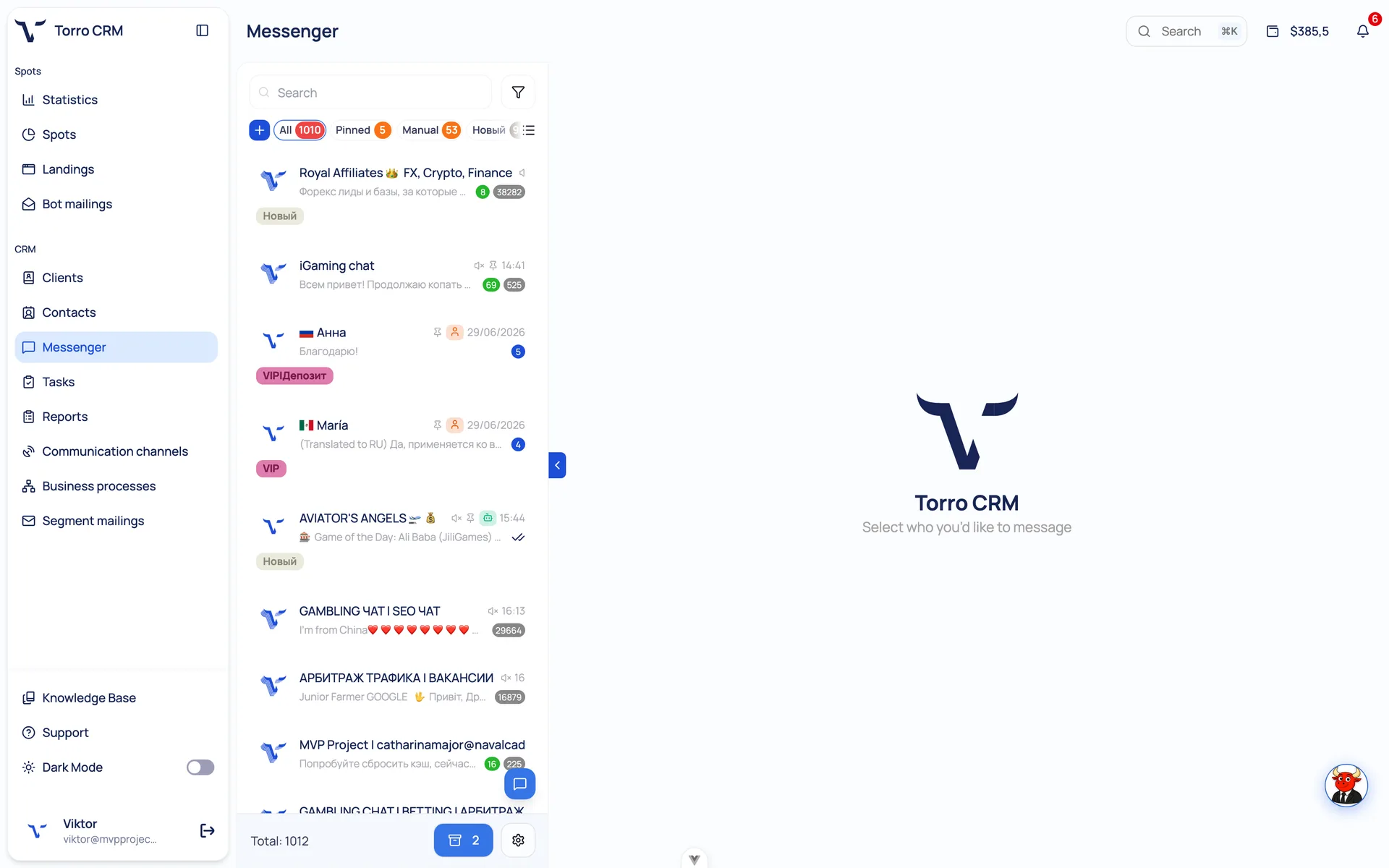
This is the path Torro AI supports through its "WhatsApp without WABA" linked-device provider: you connect a real WhatsApp number, and an AI agent answers, qualifies, and pushes deals through the CRM without ever touching the official API's cost structure or approval queues.
But honesty cuts both ways, so here are the real trade-offs:
- Ban risk is real if you're reckless. Blasting hundreds of cold messages a minute to strangers is how numbers get flagged. Serious linked-device tooling includes anti-ban pacing — warmed-up sending limits, human-like delays, gradual ramp — precisely because the underlying account is a normal one that Meta can suspend.
- No green verified badge. You're operating a standard number, not a Meta-verified business identity. For conversational sales that's usually irrelevant; for a brand that needs the trust mark, it matters.
- It's unofficial. This runs on the same mechanism as WhatsApp Web, but it isn't Meta's sanctioned business channel. That's an acceptable trade for many SMBs and a dealbreaker for a compliance-bound enterprise. Know which one you are.
How to actually choose
Skip the feature-checklist paralysis and answer three questions:
- What's your daily conversation volume, and is it inbound or outbound-heavy? Low and inbound → the App may be enough. High-volume outbound notifications → Cloud API. Warm inbound sales you want automated → linked device shines.
- Do you need Meta's official stamp (badge, compliance, mass templated campaigns)? If yes, the API is the only real answer and the cost is the price of admission. If no, you're paying for a badge you won't use.
- How fast do you need AI answering, and how much friction can you stomach? If "live this week, natural replies, flat cost" describes you, the linked-device route is the one the industry forgot to tell you about.
A pattern worth noting: plenty of teams run more than one. A verified API number for bulk utility notifications, and a linked-device number handling the actual back-and-forth sales conversations where free-form AI replies matter most. These aren't mutually exclusive — they solve different jobs.
The takeaway
The "App vs API" framing is incomplete on purpose — it's the two products the BSP economy is built to sell. For a solo operator, the free app is honestly all you need. For an enterprise sending regulated, high-volume campaigns, the Cloud API is worth every dollar of its meter. But for the large middle — SMB sales teams that just want an AI agent answering warm leads instantly, at a flat price, without weeks of verification — the linked-device route is the option that quietly fits best, provided you respect the sending limits that keep the account healthy. Choose based on your volume and your tolerance for platform risk, not on whichever channel someone happens to be reselling you.