Why WhatsApp Conversations Deserve a Real CRM
For a lot of sales teams, WhatsApp has quietly become the busiest channel in the business — busier than email, sometimes busier than the phone. Customers ask about pricing in a chat, send a screenshot of a product they like, or reply to a broadcast at 11pm from their couch. The problem is that most of these conversations live and die inside the app itself, with no record, no follow-up trigger, and no way to know which chats are actually worth a salesperson's time. That's exactly the gap a whatsapp crm is built to close: it takes the informal, high-volume nature of chat and gives it the structure a sales pipeline needs — stages, owners, deadlines, and history — without making the conversation feel any less human.
The stakes are real. A lead who messages on WhatsApp expects a fast reply, not a "we'll get back to you in 24 hours" email loop. If your team is juggling that expectation across personal phones, shared devices, or a browser tab of WhatsApp Web, deals get lost simply because nobody saw the message in time, or two reps replied to the same customer with conflicting information. A proper CRM layer on top of WhatsApp isn't a nice-to-have anymore — it's the difference between chat being a lead-generation channel and chat being a black hole where interested buyers go quiet.
What Makes a WhatsApp CRM Different from Email-Based Tools
Traditional CRM software was designed around email cadences: a lead comes in, gets a sequence of drip emails, and a rep follows up days or weeks later. WhatsApp doesn't work on that rhythm. Conversations are short, immediate, and often multi-turn within minutes. WhatsApp crm software has to be built for that pace — real-time message ingestion, instant notifications, and a pipeline view that updates as the conversation happens, not after someone manually logs a call.
There's also a structural difference: email tools assume one thread per contact per topic. WhatsApp is one continuous thread per contact, covering every topic that person has ever raised — product questions, support issues, a new order, a complaint. A CRM for WhatsApp needs to let you tag, segment, and move that single thread through different pipeline stages without losing the earlier context. And because WhatsApp is inherently a team channel when a business account is involved, the CRM needs a shared inbox where every rep sees the same conversation history, avoiding the classic problem of a customer repeating themselves to three different people.
Platforms like Torro are built around this reality from the ground up — a shared team inbox for WhatsApp and Telegram, a kanban pipeline that reflects chat-based deal stages, and automation that reacts to messages as they arrive, rather than retrofitting an email-era workflow onto a chat app.
Turning Casual Chats into Qualified Leads Automatically
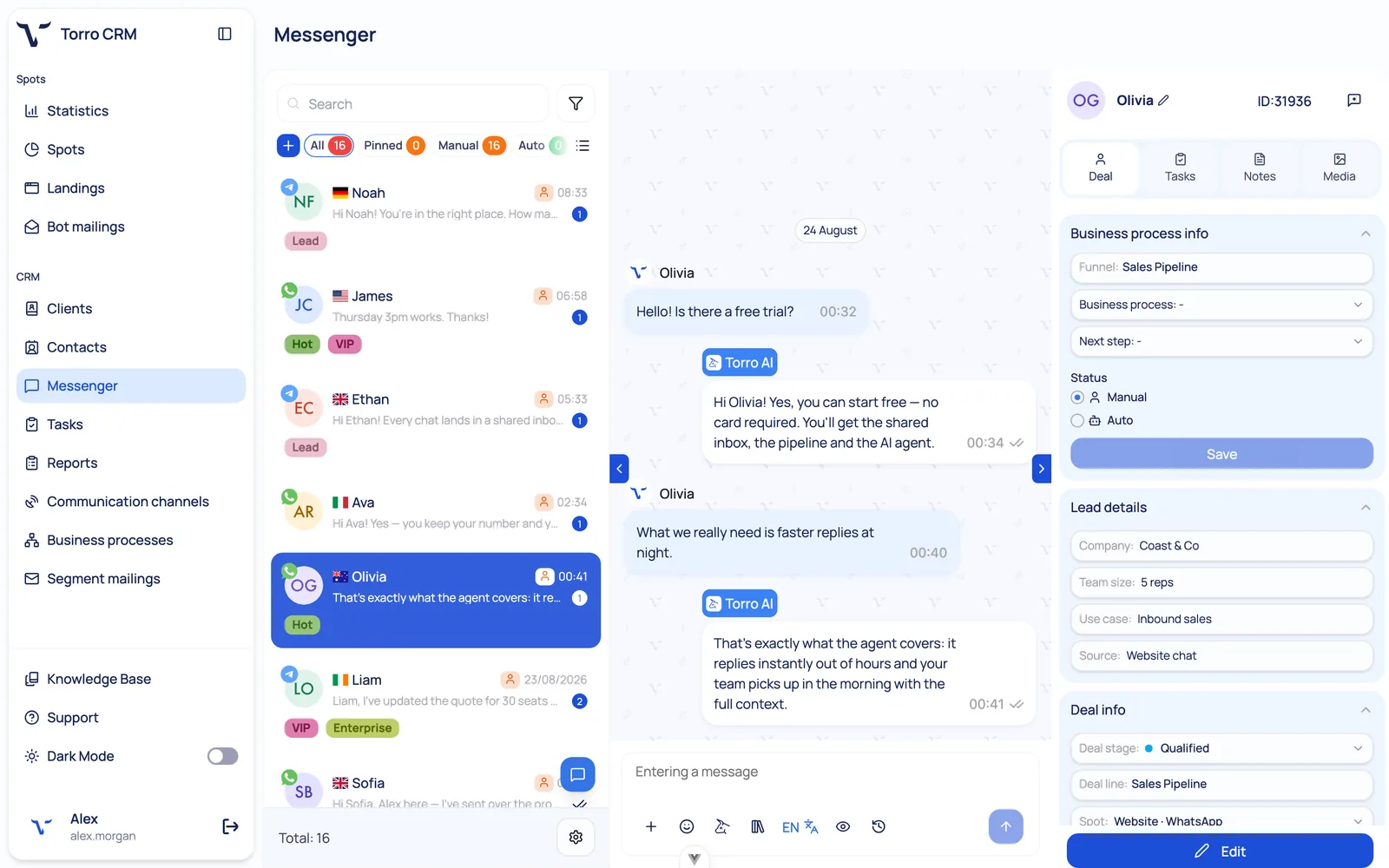
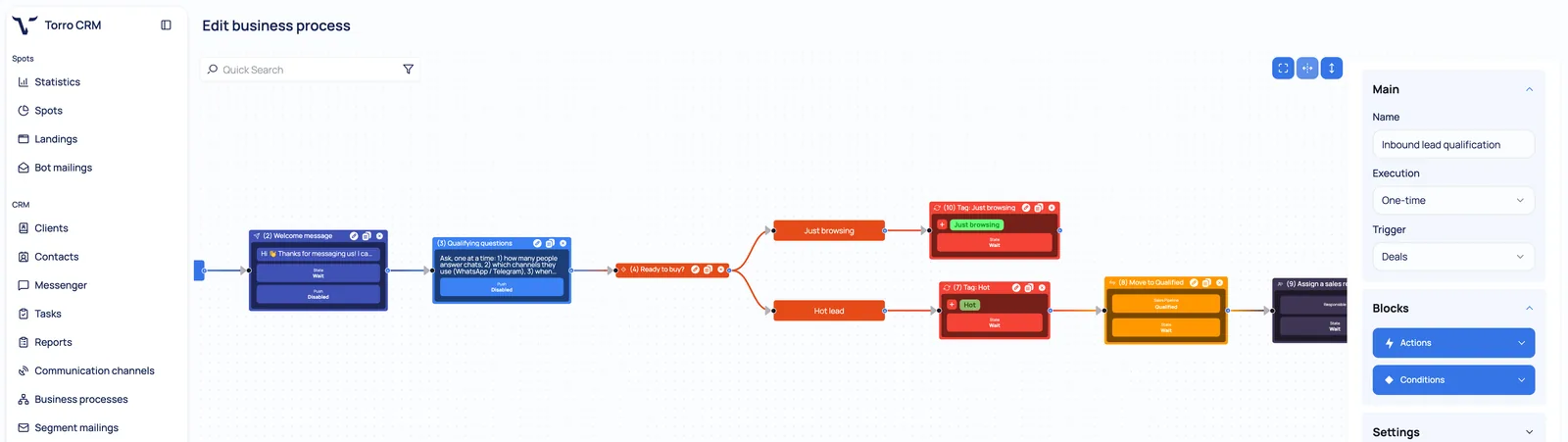
Not every "hi, is this still available?" message is a serious buyer, and not every quiet lurker is a lost cause. The real skill in turning whatsapp chats into leads is separating signal from noise without making a human read every single message. This is where automation earns its keep: simple rule-based flows can ask qualifying questions the moment someone messages in — what they're interested in, their budget range, their location, their timeline — and route the answers straight into structured lead fields.
A no-code automation builder makes this practical for non-technical teams. Instead of writing scripts, a sales manager can set up a flow that:
Greets new contacts and asks 2-3 qualifying questions before a human joins the chat
Tags the conversation based on keywords or button choices (e.g., "hot lead," "just browsing," "support issue")
Creates a card on the sales pipeline automatically, with the qualifying answers attached
Assigns the lead to the right rep or team based on product interest or region
The result is that by the time a salesperson opens the chat, they're not starting from "hi, how can I help you?" — they already know what the person wants and roughly how serious they are. That single change tends to shorten the gap between first message and qualified conversation more than any script rewrite could.
Using an AI Sales Agent to Respond Instantly and Close Faster
Speed is the one variable that consistently correlates with whether a chat lead converts. If a prospect messages three businesses at once and only one replies within a minute, that one usually wins the deal regardless of price. Human teams can't be online every minute of every day, which is why an AI sales agent has become such a practical addition to whatsapp crm for sales teams rather than a gimmick.
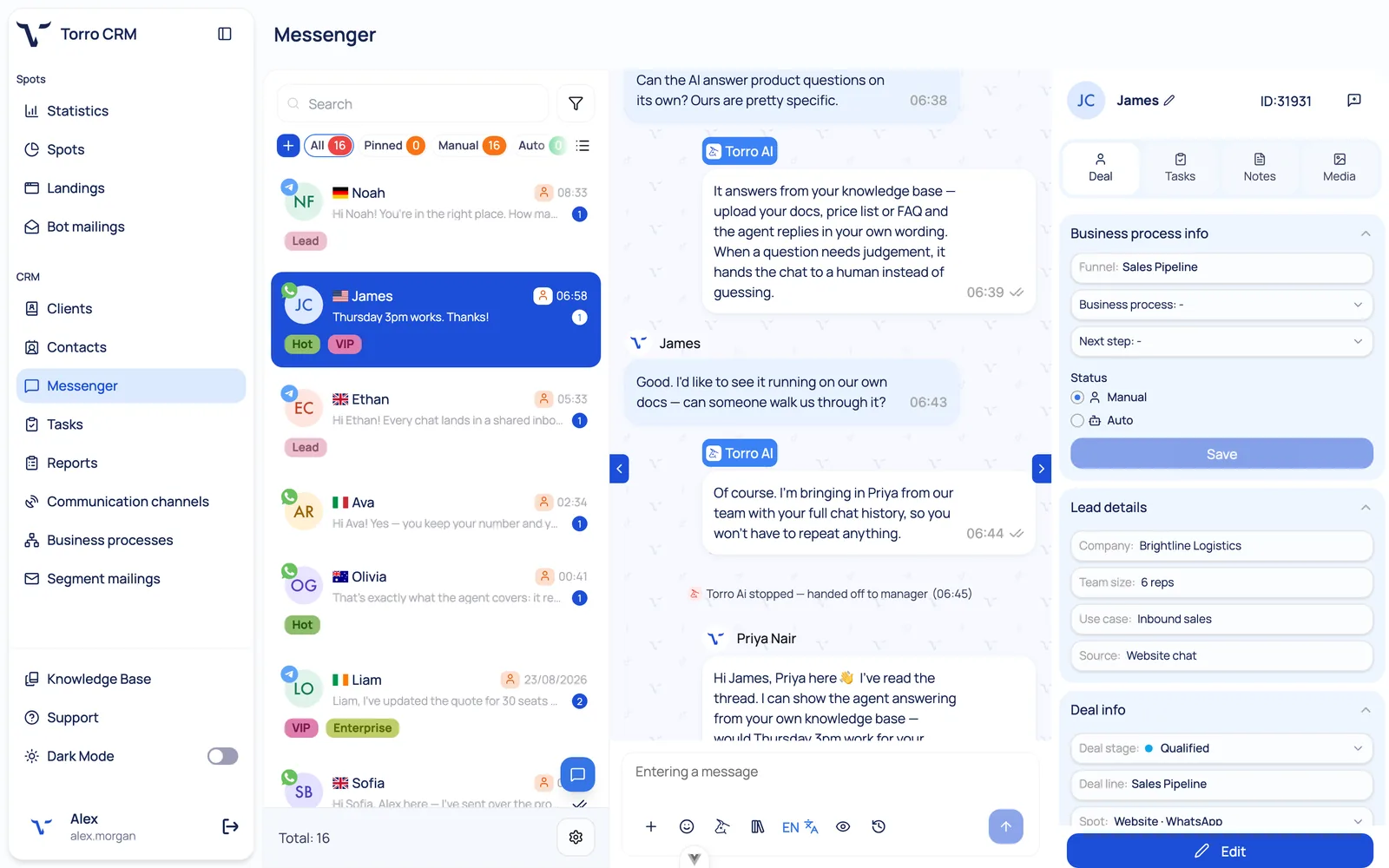
An LLM-based agent embedded in the CRM can hold a genuinely useful conversation — answering product questions from your knowledge base, checking stock or pricing, handling objections with pre-approved talking points, and only escalating to a human when the conversation needs judgment, negotiation, or approval a bot shouldn't give. Done well, this doesn't feel like talking to a chatbot with a decision tree; it feels like a fast, competent first response that a human rep can pick up seamlessly mid-conversation, with full context already visible.
Torro's AI sales agent, for instance, works directly inside the same shared inbox reps use, so there's no separate "bot platform" to manage — the AI and the human are working the same pipeline, on the same cards, with a clear handoff point. That matters for trust: customers get instant answers around the clock, but there's always a human backstop for anything that needs one, and the whole exchange is logged for the next person who touches that deal.
Tracking Every Deal Without Losing Context in Endless Threads
Anyone who has scrolled back through a six-month WhatsApp thread looking for "that one message where they agreed on a price" knows the pain a raw chat app creates. Conversations aren't organized by deal, they're organized by contact, and that's a poor fit for sales workflows where one contact might represent several deals over time, or where you need to see at a glance which stage a conversation is in.
A crm for whatsapp chats solves this by wrapping the conversation in a deal card: a kanban view where each chat is represented as a card that moves through stages like New, Qualified, Proposal Sent, Negotiation, and Won/Lost. The chat history stays attached to the card, so anyone picking it up — including a manager reviewing pipeline health — sees the full context without digging through the app. Notes, tags, attached files, and deal value all live next to the conversation rather than in a separate spreadsheet someone forgot to update.
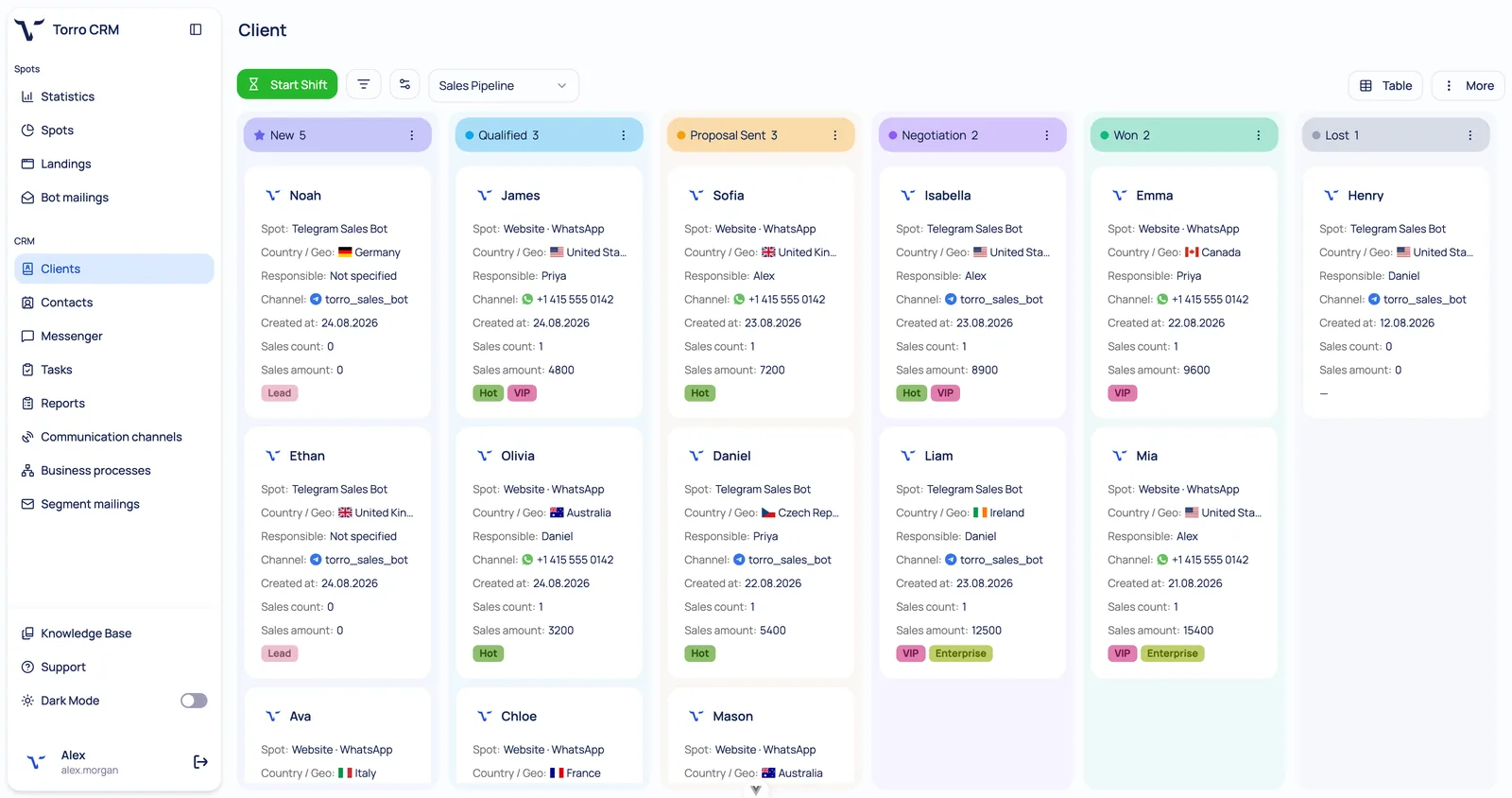
This also protects against the classic "rep goes on vacation" problem. If deal context lives only in one person's phone, the business is exposed every time that person is unavailable. Centralizing conversations and deal stages in a shared system means any teammate can step in, understand where things stand, and keep the deal moving without asking the customer to repeat themselves.
Automating Follow-Ups So No Lead Slips Through the Cracks
Most lost deals aren't lost to a competitor — they're lost to silence. A prospect goes quiet for a few days, the rep gets busy with newer leads, and nobody circles back. WhatsApp sales automation exists specifically to close this gap by making follow-up a system behavior rather than something that depends on a rep remembering.
Practical automations worth setting up include:
Auto-reminders to the assigned rep if a card sits in "Proposal Sent" for more than X days with no reply
Scheduled follow-up messages to the customer if they haven't responded within a set window
Automatic re-engagement broadcasts for leads that went cold, offering something new (a discount, a restock alert, a seasonal update)
Stage-based checklists that block a card from moving forward until a required step (like sending pricing) is logged
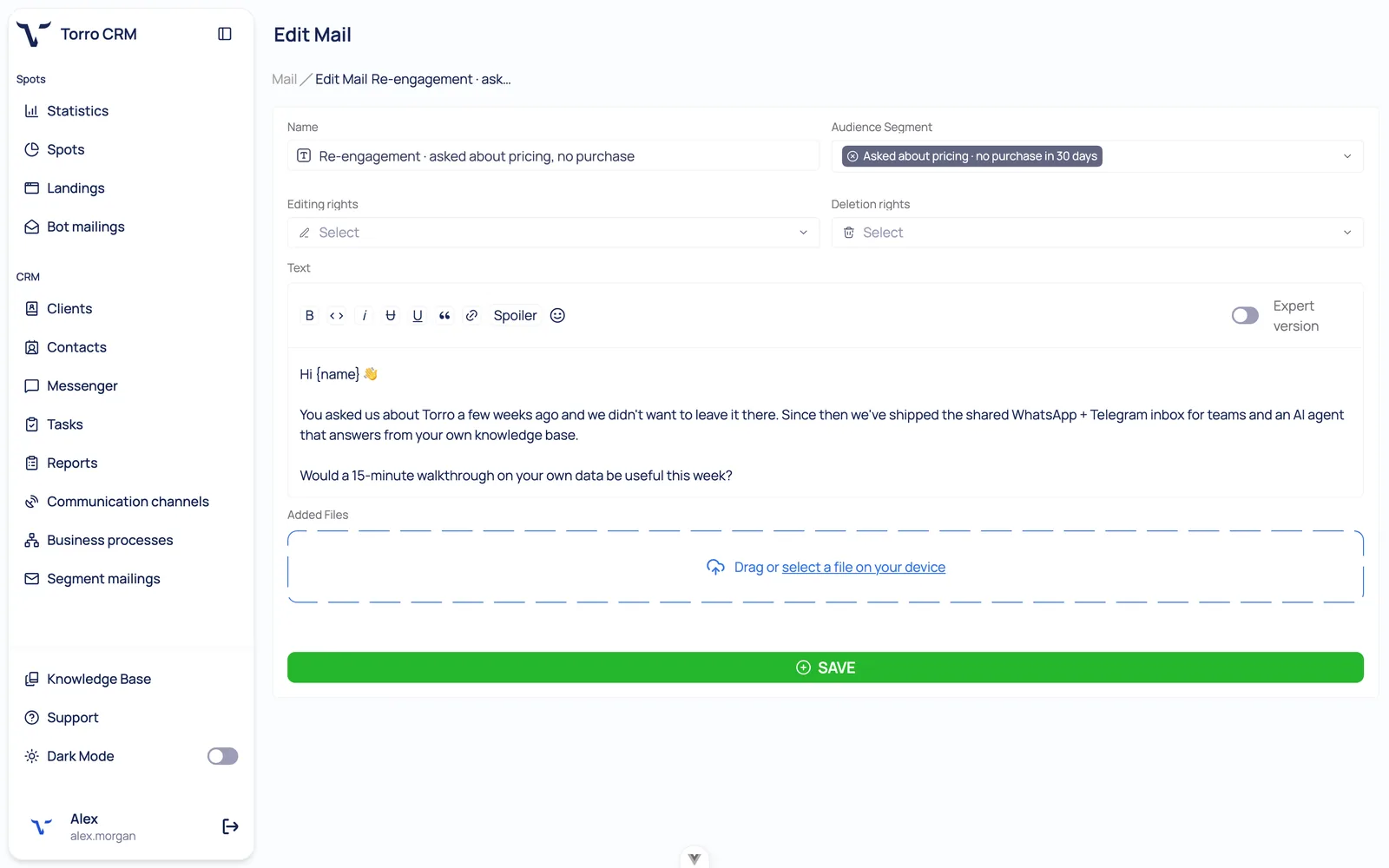
Broadcast tools deserve a specific mention here — they let a team send a targeted, personalized message to a segment of stalled leads (say, everyone who asked about a product but didn't buy in 30 days) without manually messaging each one. Combined with analytics that show reply rates and conversion by stage, a team can actually see which follow-up cadence works and adjust it, instead of guessing.
Choosing the Right WhatsApp CRM for Your Sales Team
Not every tool marketed as a WhatsApp CRM offers the same depth. Some are little more than a shared inbox with tags; others bolt WhatsApp onto a generic CRM as an afterthought integration that breaks whenever WhatsApp changes its API. Before committing, it's worth checking a few practical things: how the tool connects to WhatsApp (official API vs. linked device, and what that means for reliability and message limits), whether the pipeline is genuinely built for chat-based deals or just imported from an email-first product, and whether automation and AI features work natively or require a third-party bridge.
Feature | Basic Shared Inbox | Full WhatsApp CRM (e.g. Torro) |
|---|---|---|
Message routing to right rep | Manual | Rule-based automation |
Deal/pipeline tracking | Not included | Kanban pipeline built for chat |
Lead qualification | Manual questions by rep | Automated qualifying flows |
Instant response coverage | Only when a human is online | AI sales agent handles first response |
Follow-up on cold leads | Depends on rep memory | Scheduled and triggered automatically |
Reporting on chat conversions | Minimal or none | Analytics by stage and channel |
The right choice ultimately depends on volume and team size — a two-person shop might get by with a shared inbox and some discipline, but any team fielding a steady stream of WhatsApp and Telegram inquiries will hit a ceiling fast without pipeline structure, automation, and an AI layer to catch the messages that arrive outside business hours. Whatever you choose, the underlying goal is the same: treat every chat with the same rigor you'd apply to an email lead, because for a growing share of customers, WhatsApp isn't the backup channel anymore — it's the front door.